A Complete Guide to Content Quality Checks Before Publishing

Publishing without a proper review is how small errors slip into live content. A typo, a broken heading, or a missing meta description can quietly cost you rankings, engagement, and reader trust.
A repeatable set of content quality checks fixes that before you hit publish.
This guide walks through the full pre-publish workflow: accuracy, readability, SEO content optimization, originality, formatting, a final checklist, and how to measure quality once the post is live.
Content Quality Checks (TOC):
What Are Content Quality Checks?
Content quality checks are a structured review of a piece of content before publishing. They confirm the content is accurate, clear, readable, original, properly optimized for search, and consistent with your brand. The goal is simple: catch problems while you can still fix them cheaply, not after the post is live.
Here is the full review at a glance:
| Check | What to verify | Tools to use |
|---|---|---|
| Accuracy | Facts, data, claims, and working links | Source documents, manual fact-check |
| Readability | Short sentences, logical flow, clear headings | Read-aloud, readability tools |
| SEO | Keywords, meta tags, heading structure, internal links, alt text | SEO plugin, focus keyword review |
| Originality | No duplication, proper paraphrasing | Plagiarism checker |
| Formatting | Punctuation, consistent headings, emphasis | Grammar checker, style guide |
| Performance (after publish) | Traffic, engagement, conversions | Analytify (GA4 reports in WordPress) |
The 5-Step Content Quality Framework
Every pre-publish review can be grouped into five core quality areas.
| Quality Area | Purpose |
|---|---|
| Accuracy | Verify facts, statistics, links, and claims |
| Readability | Improve clarity, structure, and user experience |
| SEO | Ensure discoverability and search intent alignment |
| Originality | Prevent duplicate or copied content |
| Measurement | Track engagement and performance after publishing |
Together, these five areas create a repeatable framework that helps maintain content quality across every article you publish.
Why Do Content Quality Checks Matter Before Publishing?
Content quality checks matter because they prevent avoidable mistakes that damage both performance and credibility. Even well-written content can underperform if it contains unclear messaging, broken formatting, or SEO gaps.
A structured review process ensures your content is ready for both users and search engines. It improves engagement, reduces bounce rates, and builds trust. Google also rewards helpful, people-first content, which a consistent review process makes easier to produce.
Key reasons quality checks matter:
- Reduces spelling, grammar, and factual errors
- Improves overall user experience and engagement
- Ensures alignment with SEO goals and keyword targeting
- Maintains consistent brand tone and messaging
- Helps avoid publishing duplicate or low-value content
The result? When quality checks are skipped, content often needs post-publication edits, which can disrupt rankings and reduce credibility.
What Order Should You Review Content Before Publishing?
Following a consistent review process helps you catch errors efficiently and avoid repeating work. Instead of checking SEO, grammar, and formatting randomly, review content in a logical sequence.
A simple content review workflow looks like this:
| Step | What to Review |
|---|---|
| 1 | Verify facts, sources, and links |
| 2 | Improve clarity and readability |
| 3 | Review SEO elements and search intent |
| 4 | Check originality and plagiarism |
| 5 | Review formatting and brand consistency |
| 6 | Complete a final proofread |
| 7 | Publish and monitor performance |
This workflow ensures every article receives the same level of quality control before publication.
How Do You Assess Content Accuracy, Clarity, and Readability?
You assess accuracy, clarity, and readability by reviewing the content’s core quality before touching SEO or formatting. Accuracy ensures every fact is correct and reliable. Clarity ensures ideas are easy to understand. Readability measures how smoothly the content flows for the reader.
What Should You Look for in Readability?
- Short, clear sentences that are easy to scan
- Logical flow between paragraphs and sections
- Avoidance of overly complex or technical language without explanation
- Proper use of headings to structure ideas
A good content review process includes reading the content out loud or using readability tools to spot awkward phrasing. If a sentence feels difficult to read, it likely needs simplification.
Consistency in tone matters too. The content should feel like it comes from a single voice, even when multiple contributors worked on it.
How Do You Run SEO Content Optimization Checks?
You run SEO content optimization checks by reviewing keywords, structure, and search intent alongside readability, not separately. A well-written article will not perform if it is not properly optimized for search engines.
During your SEO content optimization review, focus on how well the content targets its intended keywords and search intent. Ensure the primary and secondary keywords are placed naturally within the content.
What are the Most Common SEO Mistakes to Avoid?
- Overusing keywords in an unnatural way
- Missing or weak meta titles and descriptions
- Lack of proper heading structure (H1, H2, H3)
- Not using internal linking where relevant
- Ignoring the search intent of the topic
Check whether headings are descriptive and aligned with user queries. Each section should clearly signal what the reader will learn.
Additionally, ensure images (if used) have descriptive alt text, and that formatting supports scannability. SEO is not just about keywords, but also about structure and user experience.
How Do You Check Plagiarism and Originality?
You check originality by running your content through a plagiarism tool before publishing. Always run your content through the most reliable plagiarism checker to confirm it is fully original. This step identifies duplicated or closely matched content across the web.
This matters most for content that involves research, rewriting, or multiple contributors. Even accidental similarities can affect trust and search visibility.
Key originality checks to perform:
- Ensure all content is written in your own words
- Verify that no sections are unintentionally copied
- Check for duplicate content within your own website
- Confirm proper paraphrasing of referenced ideas
Maintaining originality strengthens your brand authority and improves long-term SEO performance.
How Do You Review Grammar, Formatting, and Brand Consistency?
You review grammar, formatting, and brand consistency by polishing the presentation and aligning everything with your brand style. Grammar and formatting issues distract readers and reduce trust. Consistency makes your content feel professional and cohesive across all pages.
Which Tools Help Streamline Content Review?
- Grammar and spelling checkers for error detection
- Style guides for maintaining tone consistency
- Content templates for structured formatting
- Read-aloud tools for catching awkward phrasing
During this stage, check for:
- Proper punctuation and sentence structure
- Consistent use of headings and subheadings
- Uniform tone across all sections
- Correct use of bold, italics, and lists for emphasis
Brand consistency is especially important for businesses publishing regularly. Even small inconsistencies can make content feel unpolished.
What Should Your Pre-Publishing Checklist Include?
Your pre-publishing checklist should include every quality dimension in one repeatable list, so nothing is missed before content goes live. This helps teams stay consistent and gives solo writers a system they can reuse on every post.
A simple blog quality control checklist:
- Content accuracy reviewed and verified
- Readability checked and improved
- SEO keywords placed naturally and correctly
- Headings structured properly for SEO
- Plagiarism and originality confirmed
- Grammar and spelling errors corrected
- Formatting checked for consistency
- Internal links added where relevant
- Meta title and description prepared
- Final read-through completed
A consistent checklist reduces errors and speeds up publishing over time. It also ensures every article meets the same standard, regardless of who writes it.
How Do You Measure Content Quality After You Publish?
You measure published content quality with analytics by tracking how real readers engage with the page after it goes live. Pre-publish checks confirm the content is ready. They cannot tell you whether it actually performs.
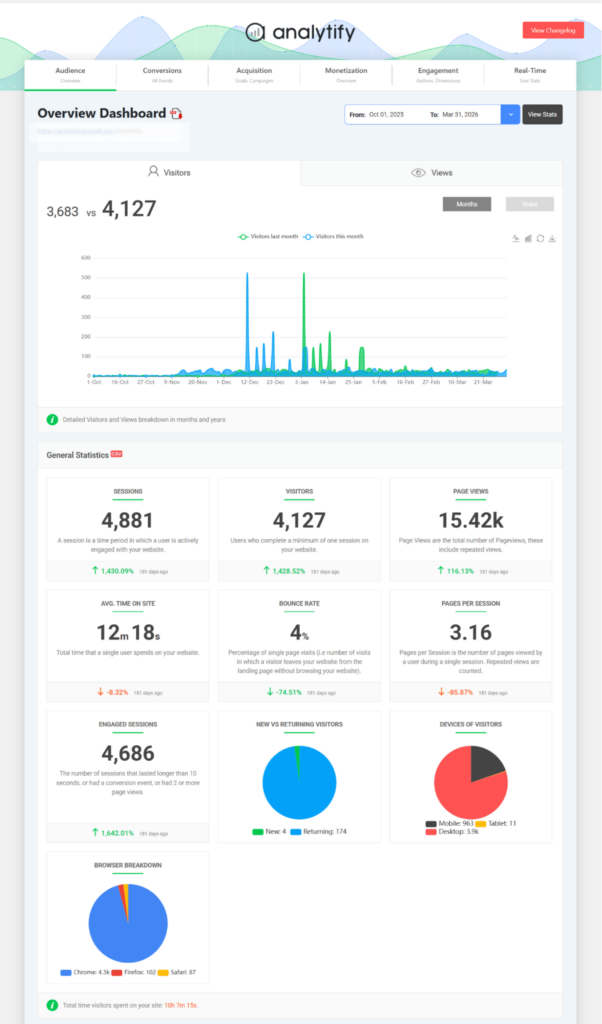
Analytify shows that performance data inside WordPress by presenting your Google Analytics 4 reports next to your posts. Analytify is not a grammar, SEO, or plagiarism tool. Analytify is the measurement layer that tells you whether your quality checks paid off.

Here is what Analytify adds once a post is live:
- Analytify reports per-post sessions, pageviews, and average engagement time directly below each post.
- Analytify shows which published articles attract traffic and which quietly underperform.
- Analytify surfaces engagement signals, so you can spot readability or search-intent problems after publishing.
- Analytify Pro adds campaign, author, and real-time reports for deeper content analysis. These reports are Pro-only, not part of the free tier.

So what does this mean for you? If you run careful pre-publish checks but never look at what happens next, you are optimizing blind. Analytify closes that loop inside WordPress.
Which Metrics Reveal Content Quality Problems?
Once content is live, performance metrics help identify issues that are difficult to spot during the review process.
| Metric | What It May Indicate |
|---|---|
| Low engagement time | Readers are not finding the content useful or easy to read |
| High bounce rate | Search intent mismatch or weak internal linking |
| Low pageviews | Poor rankings or insufficient promotion |
| Low conversions | Weak calls-to-action or user journey issues |
| Declining traffic | Content may need updating or re-optimization |
Monitoring these signals helps you understand whether your content quality checks are translating into real-world results.
Join 50,000+ WordPress users who use Analytify to see their Google Analytics without the complexity. Get Analytify Pro and track how each published post performs.
Frequently Asked Questions
1. What are the most important content quality checks before publishing?
The most important content quality checks are accuracy, readability, SEO optimization, originality, and formatting consistency. Accuracy and originality protect credibility. Readability and formatting protect the user experience. SEO optimization protects search visibility. Reviewing all five before publishing keeps quality consistent across every post.
2. How do you check content for SEO before publishing?
You check content for SEO by confirming the primary and secondary keywords appear naturally, the heading structure is correct (one H1, logical H2s and H3s), and the meta title and description are written. Also, verify internal links point to relevant pages and that images have descriptive alt text. These checks align the content with search intent and improve discoverability.
3. What is the best way to check content originality?
The best way to check originality is to run the content through a plagiarism checker before publishing. Confirm the text is written in your own words, that no sections are unintentionally copied, and that referenced ideas are properly paraphrased. Also, check for duplicate content within your own website, since internal duplication can dilute rankings.
4. Why is my published content not performing despite passing quality checks?
Passing pre-publish checks does not guarantee performance, because checks confirm readiness, not results. Common reasons include weak search-intent match, low traffic reaching the page, or thin internal linking. To find the exact drop-off, measure the live page with analytics. Analytify shows per-post traffic and engagement inside WordPress, so you can see which posts stall and why.
5. How often should you review content quality after publishing?
Review content quality before every publish, then revisit live content on a schedule, such as quarterly. Rankings and AI citations decay over time, so older posts need refreshing to stay competitive. Use your analytics to prioritize updates: refresh the published posts that are losing traffic first, rather than editing everything at once.
Final Thoughts
A structured approach to content quality checks is essential for producing high-performing, reliable, and engaging content. It ensures your writing is well-crafted and optimized for both readers and search engines.
By combining accuracy checks, SEO content optimization, originality reviews, and formatting consistency, you build a strong foundation for every piece you publish.
Your next three steps:
- Build one repeatable pre-publishing checklist and use it on every post.
- Run accuracy, readability, SEO, originality, and formatting checks before you hit publish.
- Measure performance after publishing, then update the posts that underperform.
See which published posts actually perform: track per-post traffic and engagement inside WordPress with Analytify.
Further Readings:
Want to see which articles are actually engaging readers? Use Analytify to track post-level traffic and engagement directly inside your WordPress dashboard.