10 Best Marketing Automation Tools to Improve Workflows (2026)

Managing marketing tasks manually slows everything down. You repeat the same steps, sending emails, tracking leads, pulling reports, while the real work waits.
The right marketing automation tool handles all of that for you. It runs your campaigns, tracks performance, and saves hours every week.
Here are the 10 best marketing automation tools in 2026, ranked for different business types and budgets.
Best Marketing Automation Tools (TOC):
What Are Marketing Automation Tools?
Marketing automation tools are software platforms that handle repetitive marketing tasks automatically. Instead of doing everything by hand, you set up rules and workflows, and the tool does the work.
Key features of these digital marketing automation tools include:
- Email Marketing Automation: Send targeted emails based on user behavior
- CRM Integration: Seamlessly connect your marketing platform with your CRM system to track leads and customer journeys.
- Lead Generation: Automate the process of gathering and nurturing leads to push them down the sales funnel.
- Ad Automation: Manage and automate your paid advertising campaigns across multiple platforms.
- Analytics and Reporting: Measure campaign performance in real time
With these features, marketing ad automation tools help businesses save valuable time, reduce human error, and enhance customer experiences.
Top Marketing Automation Tools 2026: Quick Comparison
| Tool | Best For | Starting Price | Key Strength |
|---|---|---|---|
| Analytify | WordPress users | $59/yr | GA4 reporting inside WordPress |
| HubSpot | SMBs, inbound marketing | Free / $45+/mo | All-in-one platform |
| Marketo Engage | Enterprises | Custom | Multi-channel + Salesforce |
| ActiveCampaign | SMBs | $15/mo | Email + CRM combo |
| Mailchimp | Startups | Free | Easy email campaigns |
| Salesforce B2B | B2B companies | Custom | Deep Salesforce integration |
| Drip | E-commerce | $39/mo | Personalized email flows |
| Brevo | Multi-channel SMBs | Free / $25+/mo | Email + SMS campaigns |
| Selzy | Solopreneurs | $7/mo | Fast, simple email automation |
| Autopilot | Agencies | $49/mo | Visual journey builder |
Below is the list of marketing automation tools that can help transform how you manage your marketing efforts in 2026.
1. Analytify
Join 50,000+ beginners & professionals who use Analytify to simplify their Google Analytics!
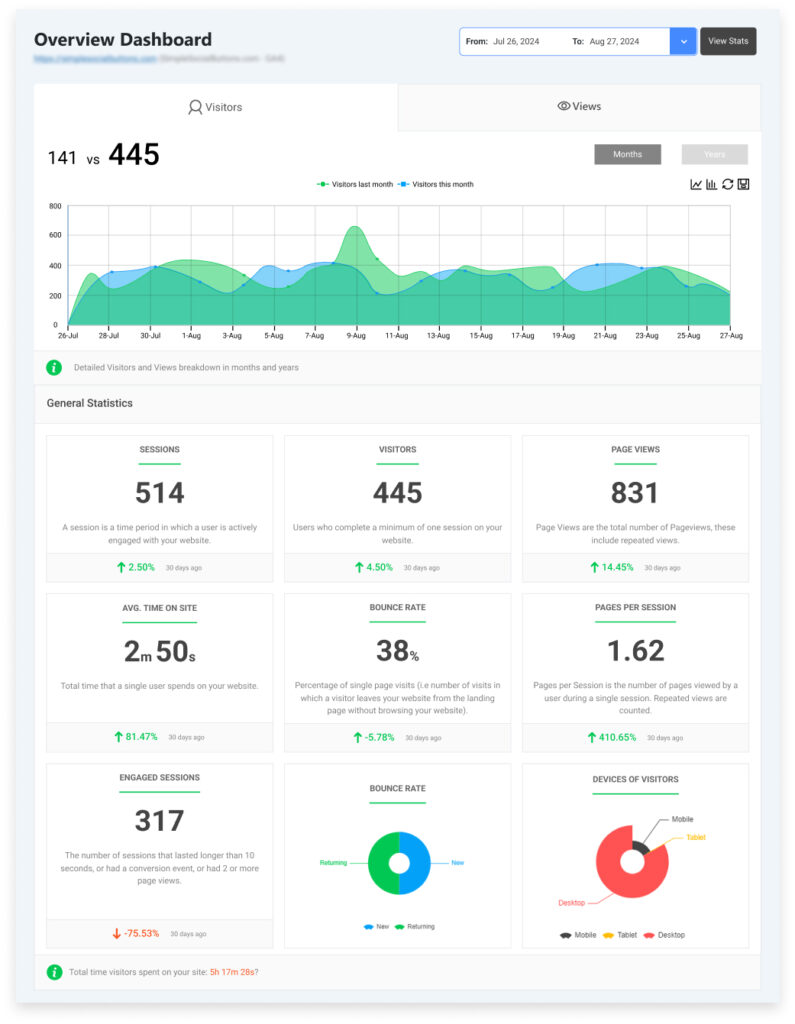
Analytify brings Google Analytics data directly into your WordPress dashboard. No switching tabs, no complex setups. Just clear reports right where you work.
It is built specifically for WordPress users who want real GA4 insights without the technical headache. You can track website traffic, email campaigns, and ad performance, all from one place.
Features:
- Google Analytics Integration: Analytify directly connects with Google Analytics, allowing you to view detailed reports of your website’s traffic and user behavior without leaving your WordPress dashboard. You can track real-time data, page views, sessions, traffic sources, and user engagement in a simplified format.
- Email Campaign Performance Tracking: With Analytify, you can track the effectiveness of your email campaigns by monitoring key metrics such as open rates, click-through rates, bounce rates, and conversions. This integration makes it easier to adjust your campaigns based on real-time data.
- Ad Tracking: Analytify offers built-in integration with Google Ads and Facebook Ads, providing you with comprehensive insights into the performance of your paid advertising campaigns. Track your return on investment (ROI), cost per click (CPC), and overall campaign success directly from your WordPress site.
- User-Friendly Dashboard: Analytify’s dashboard is designed to be intuitive and accessible, allowing you to quickly understand key performance indicators (KPIs) without the need for technical expertise. The clean, visually appealing interface helps marketers easily interpret data, making data-driven decisions faster and more efficiently.
- Real-Time Reporting: With real-time analytics, businesses can instantly measure the success of their marketing efforts. Whether you’re analyzing website traffic, evaluating email campaigns, or reviewing ad performance, Analytify ensures that you have access to up-to-the-minute data at your fingertips.
Pros:
- Simplicity and Ease of Use: The tool is incredibly user-friendly, allowing even beginners to quickly set up and start tracking their campaigns. There’s no need for complex coding or technical setup.
- Seamless WordPress Integration: As a WordPress-specific tool, Analytify integrates effortlessly with WordPress, making it the perfect solution for website owners, bloggers, and eCommerce businesses using the WordPress platform.
- Real-Time Insights: You get immediate access to performance data, helping you make quicker, more informed marketing decisions. This is ideal for businesses that require fast action based on up-to-date information.
- Actionable Analytics: Analytify doesn’t just show raw data; it provides insights that are easy to act upon. You can see how well your campaigns are performing, identify areas for improvement, and adjust your strategies in real-time.
Cons:
- Limited to WordPress Users: Works only with WordPress, not with Wix, Shopify, or other platforms
Best for:
Analytify is best suited for businesses that use WordPress and want a simple yet powerful solution for tracking their marketing performance. It’s particularly ideal for small to medium-sized businesses, bloggers, and eCommerce stores looking to gain insights into their marketing campaigns without the need for technical expertise.
2. HubSpot Marketing Hub
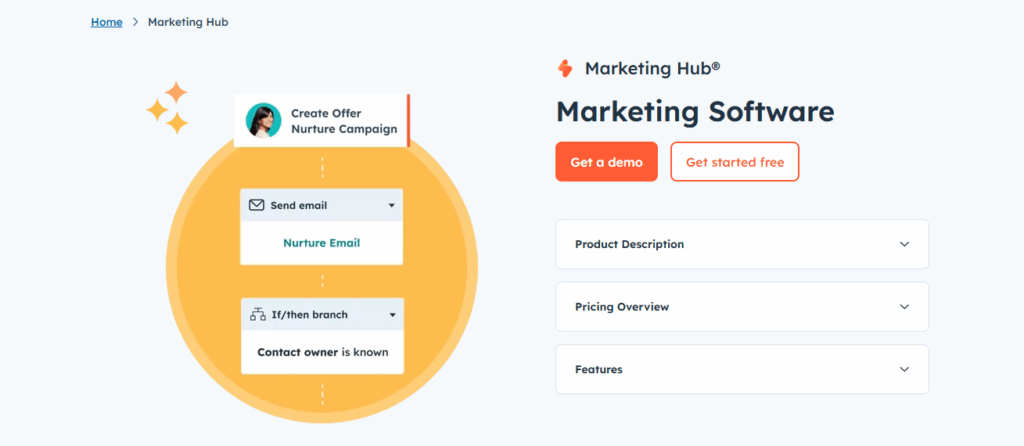
HubSpot is one of the most widely used marketing automation software examples. It covers email marketing, CRM, lead nurturing, and content management in a single platform.
It grows with your business. Start with the free plan and upgrade as your needs expand.
Features:
- Email Marketing Automation: Allows businesses to set up automated email campaigns to nurture leads.
- CRM Integration: The hub integrates seamlessly with HubSpot’s CRM to manage contacts and automate customer interactions.
- Content Management: Offers tools for managing content and creating landing pages, blogs, and forms.
- Lead Nurturing: Automates workflows to push leads down the sales funnel, enhancing conversion rates.
Pros:
- Comprehensive set of tools that grow with your business.
- Excellent customer support and educational resources.
- Highly customizable workflows for targeted marketing automation.
Cons:
- Pricing can be steep for smaller businesses, especially for advanced features.
- Some users find the tool overwhelming due to its wide range of features.
Best for:
Small to medium-sized businesses seeking an all-in-one inbound marketing solution, especially those looking to scale their content marketing and lead-nurturing processes.
3. Marketo Engage
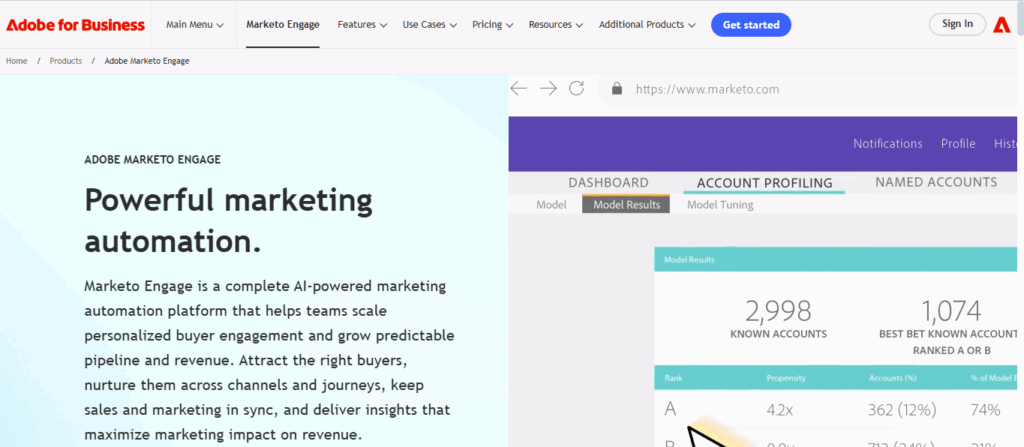
Marketo Engage, by Adobe, is built for enterprise-level marketing automation. It handles lead management, multi-channel campaigns, and advanced analytics at scale.
It integrates with Salesforce CRM, which makes it ideal for companies that need tight alignment between marketing and sales.
Features:
- Lead Management: Automates lead nurturing, scoring, and management.
- Email Automation: Personalized email workflows triggered by customer actions.
- Analytics and Reporting: Advanced reporting tools to track campaign performance and ROI.
- Cross-Channel Marketing: Supports email, social media, mobile, and ads for a unified customer experience.
- CRM Integration: Seamlessly integrates with CRM systems like Salesforce.
Pros:
- Highly customizable and scalable for large enterprises.
- Powerful multi-channel automation and detailed analytics.
Cons:
- Expensive, making it more suitable for large businesses.
- Requires a learning curve due to its complexity.
Best for:
Large B2B companies and enterprises need advanced marketing automation and integration with CRM systems like Salesforce.
4. ActiveCampaign
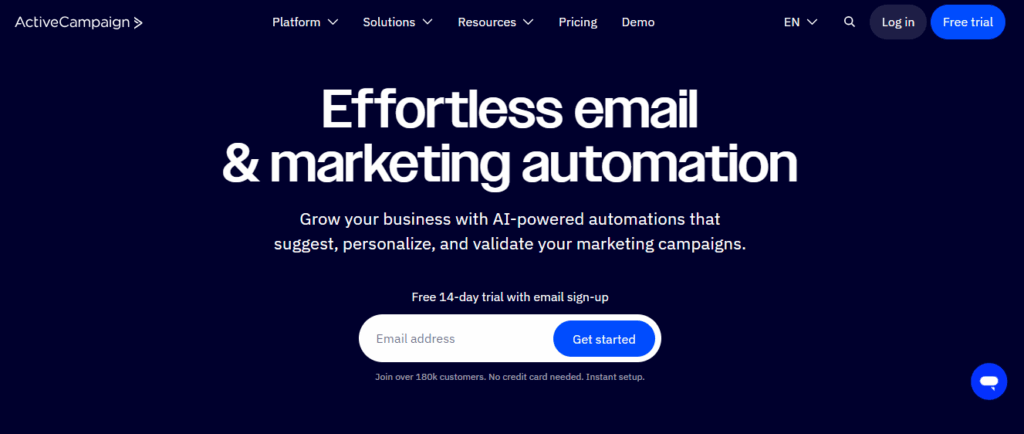
ActiveCampaign combines email marketing, CRM, and sales automation in one affordable tool. It is a strong choice for small and mid-sized businesses that want power without complexity.
Features:
- Email Automation: Create automated email campaigns based on customer actions and behaviors.
- CRM Integration: Manage your contacts, sales pipeline, and follow-ups automatically.
- Sales Automation: Streamline your sales process with automation that sends timely reminders and follow-up emails to prospects.
- Customer Segmentation: Automatically segment your audience based on behavior, location, or other criteria.
Pros:
- Affordable pricing plans for small businesses.
- Highly customizable with an easy-to-use interface.
- Excellent customer support and resources for users.
Cons:
- Limited A/B testing functionality.
- The reporting feature could be more advanced for some businesses.
Best for:
Small to mid-sized businesses looking for a user-friendly yet powerful email marketing and sales automation tool.
5. Mailchimp
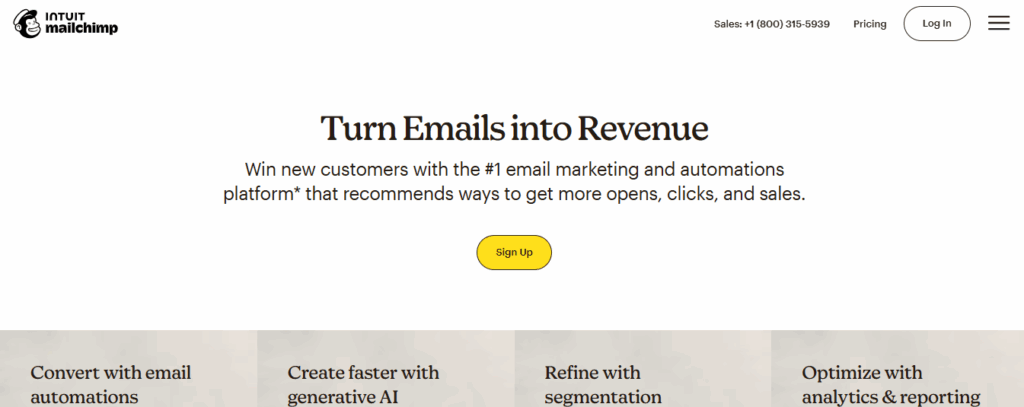
Mailchimp is one of the most recognized names in email marketing. It has expanded beyond email to offer a full automated marketing tool for small businesses and startups.
Features:
- Email Marketing Automation: Send targeted, automated emails based on user behaviors.
- Marketing CRM: Build and manage customer relationships with automated workflows.
- Segmentation and Personalization: Automatically segment customers and personalize communication.
- Ad Automation: Manage your social media ads and Google ads within the platform.
Pros:
- Free plan for smaller businesses with essential features.
- Easy-to-use interface with drag-and-drop email builder.
- Great for e-commerce with strong integrations.
Cons:
- Limited reporting and analytics features on lower-tier plans.
- The interface can feel a bit outdated for users seeking more advanced tools.
Best for:
Small businesses and startups seeking an affordable and easy-to-use email marketing solution with room to scale.
6. Salesforce B2B Automation
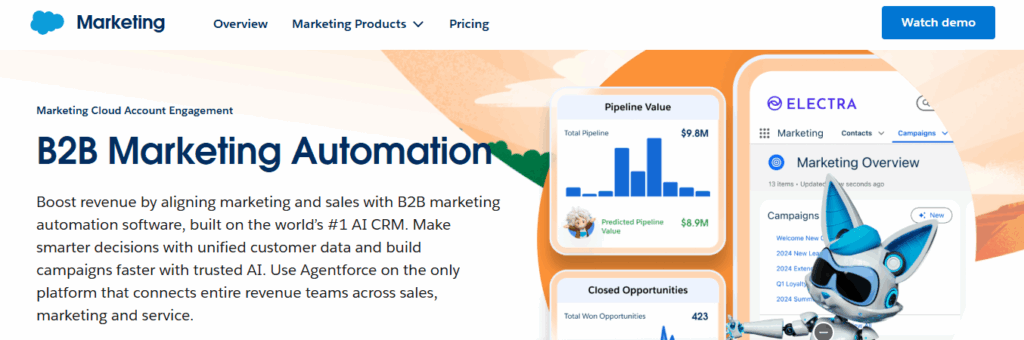
Salesforce B2B Automation, formerly known as Pardot, is a dedicated B2B marketing automation platform.
It automates lead generation, nurturing, and engagement. The deep Salesforce CRM integration makes it easy for marketing and sales teams to stay aligned.
Features:
- Lead Nurturing: Automates emails and campaigns to nurture leads and convert them into customers.
- CRM Integration: Seamlessly integrates with Salesforce to align marketing and sales teams.
- ROI Tracking: Tracks the return on investment (ROI) of marketing campaigns.
- Email Automation: Personalizes and automates email workflows based on user behaviors.
Pros:
- Powerful B2B-focused features.
- Deep integration with Salesforce CRM, making it perfect for businesses already using Salesforce.
- Robust lead scoring and nurturing capabilities.
Cons:
- High price point for small businesses.
- Can be overwhelming for users new to marketing automation.
Best for:
B2B companies and Salesforce users who need advanced lead nurturing, CRM integration, and ROI tracking.
7. Drip
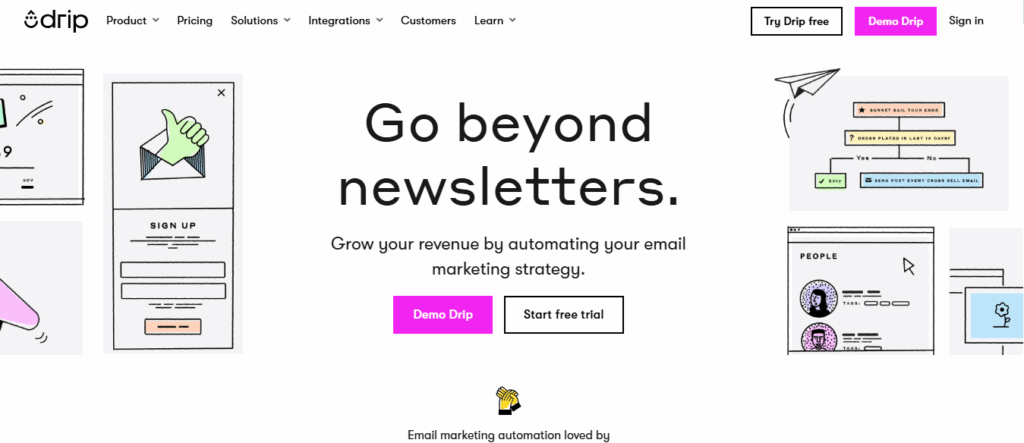
Drip is designed specifically for e-commerce businesses. It helps online retailers send personalized emails based on shopping behavior, purchase history, and browsing activity.
Features:
- E-commerce Integrations: Seamlessly integrates with popular e-commerce platforms like Shopify and WooCommerce.
- Personalized Email Marketing: Delivers highly targeted and personalized emails based on customer behavior.
- Customer Segmentation: Automatically segments customers based on purchase behavior and browsing activity.
- Workflow Automation: Automates key processes like cart abandonment emails, product recommendations, and loyalty programs.
Pros:
- Great for e-commerce businesses looking to increase customer lifetime value.
- Powerful segmentation and personalization capabilities.
- Easy integration with e-commerce platforms.
Cons:
- Focuses primarily on e-commerce, making it less suitable for non-retail businesses.
- Pricing may be steep for smaller e-commerce stores.
Best for:
E-commerce businesses that want to automate personalized email marketing and enhance customer engagement.
8. Brevo (Formerly Sendinblue)
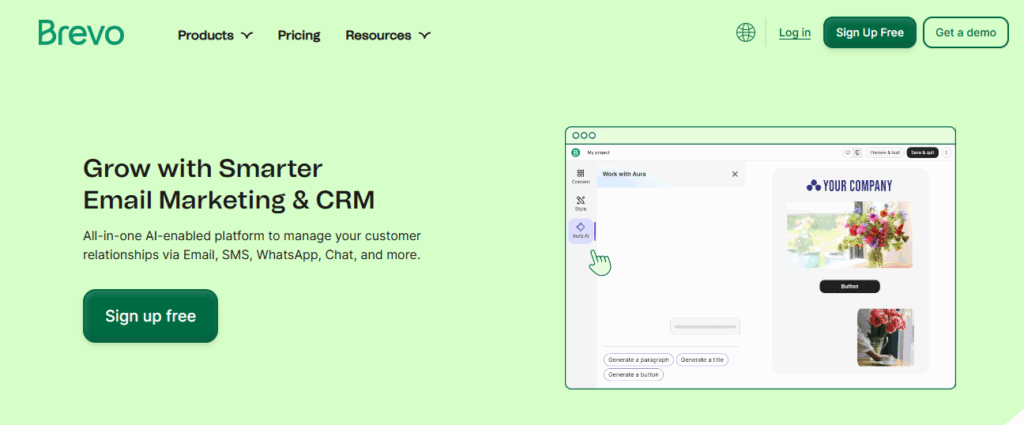
Brevo, formerly known as Sendinblue, is a digital marketing automation tool that goes beyond email. It lets you reach customers through email, SMS, WhatsApp, and live chat, all from one dashboard.
Features:
- Email and SMS Marketing: Create and automate both email and SMS campaigns.
- CRM: Manage contacts and segment them based on various criteria.
- Transactional Emails: Automate order confirmations, invoices, and other transactional emails.
- Marketing Automation: Automate workflows, including welcome emails, follow-up emails, and more.
Pros:
- Affordable pricing with a solid free plan.
- Multi-channel communication (email and SMS).
- Strong support for transactional emails and marketing automation.
Cons:
- Reporting features could be more advanced.
- The email editor may be less flexible compared to competitors.
Best for:
Small to medium businesses looking for a budget-friendly solution that offers multi-channel marketing automation.
9. Selzy

Selzy is a fast, simple email marketing platform built for small businesses and solopreneurs. You can launch a campaign in under 15 minutes, with no technical knowledge required.
Features:
- Email Automation: Set up trigger-based email sequences to engage your audience at the right time.
- Drag-and-Drop Builder: Create professional emails quickly without coding.
- Audience Segmentation: Target subscribers based on actions, tags, or custom fields.
- A/B Testing: Test subject lines, content, and send times for better performance.
- Analytics Dashboard: Track opens, clicks, and other key metrics in real time.
Pros:
- Simple and fast onboarding process.
- Affordable pricing tailored for small businesses.
- Responsive customer support and extensive knowledge base.
Cons:
- Fewer advanced CRM features compared to larger platforms.
- Limited native integrations (though it supports Zapier and API connections).
Best for:
Entrepreneurs, solopreneurs, and growing businesses that need a no-fuss, affordable email marketing tool with strong automation and reliable performance.
10. Autopilot
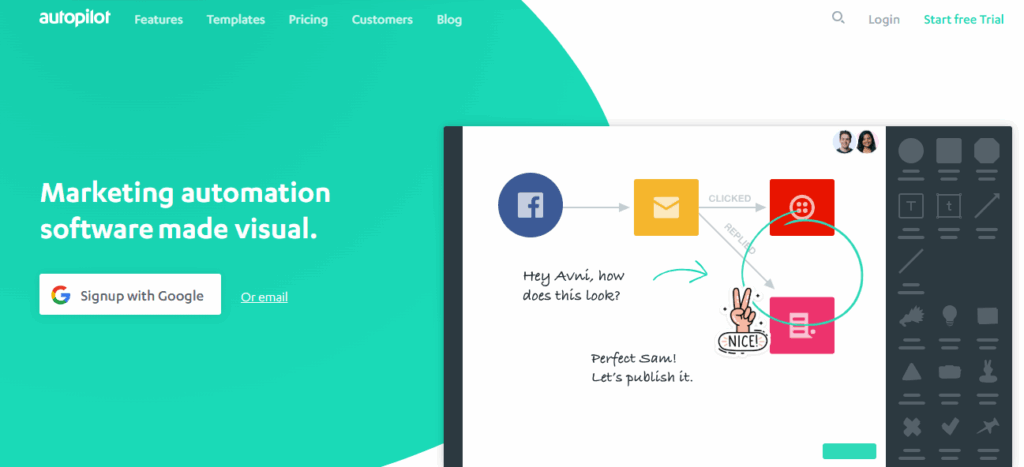
Autopilot is a visual marketing automation tool that lets you map customer journeys with a drag-and-drop canvas. It works well for marketing teams and agencies managing complex workflows.
Features:
- Journey Mapping: Create visual customer journeys with ease.
- Email Automation: Set up automated email workflows triggered by customer actions.
- Multi-Channel Marketing: Automate communication across email, SMS, and other channels.
- Integration: Easily integrate with third-party tools like CRM, payment gateways, and more.
Pros:
- Intuitive, drag-and-drop interface.
- Multi-channel marketing automation.
- Strong integrations with a variety of platforms.
Cons:
- Higher price for advanced features.
- Limited reporting capabilities.
Best for:
Marketing teams and agencies
need to map out customer journeys and automate communications across multiple channels.
11. Zoho MarketingHub
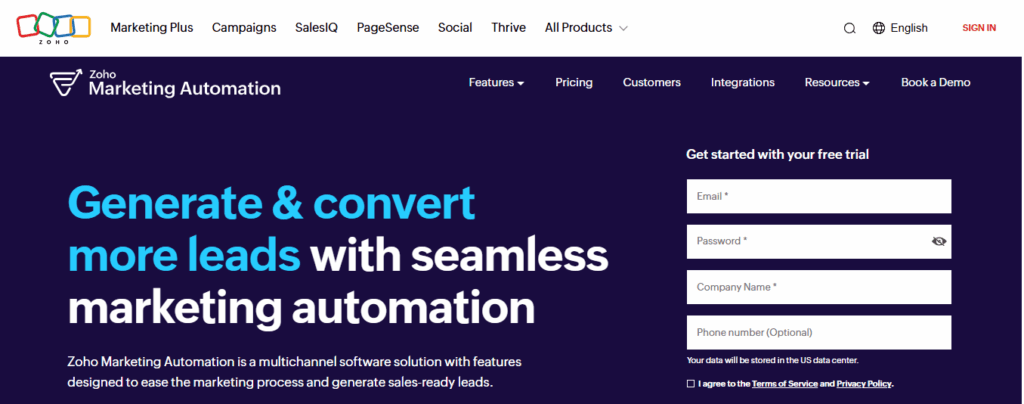
Zoho MarketingHub is a comprehensive marketing automation tool designed for small businesses, especially those already using the Zoho ecosystem. It provides features for lead management, email campaigns, social media automation, and more.
Features:
- Email Campaigns: Automate email marketing and engagement with personalized emails.
- Lead Management: Capture and manage leads throughout the sales funnel.
- Social Media Automation: Automate social media posts and campaigns.
- Analytics: Get insights into campaign performance to optimize future efforts.
Pros:
- Affordable pricing for small businesses.
- Seamless integration with Zoho CRM and other Zoho tools.
- Solid lead management and social media automation capabilities.
Cons:
- Limited to small businesses, with fewer features than larger platforms.
- Social media automation features are not as advanced as those of competitors.
Best for:
Small businesses using the Zoho ecosystem who need an affordable, integrated marketing automation tool.
Best Marketing Automation Tools (FAQs)
1. Can marketing automation tools really save time?
Yes, by automating repetitive tasks like email marketing, lead nurturing, and reporting, marketing automation tools save time and allow teams to focus on more strategic activities.
2. What are the best marketing automation tools in 2026?
Analytify is the top choice for WordPress users. It connects directly with Google Analytics and shows all your data inside the WordPress dashboard, so you never need to log in to GA4 separately.
3. How do marketing automation tools improve workflows?
Marketing automation tools streamline workflows by automating repetitive tasks such as email marketing, lead generation, and customer segmentation. These tools help businesses save time, reduce manual effort, and increase efficiency. Features like ad automation and real-time analytics allow marketers to focus on strategic initiatives while the tools handle the execution of campaigns across multiple channels, such as email, SMS, and social media.
4. What are automated marketing tools, and how do they work?
Mailchimp, Brevo, and Selzy are among the best automated marketing tools for small businesses. All three offer free or low-cost plans with solid email automation and reporting features.
Which Marketing Automation Tool Is Right for You?
Integrating marketing automation tools into your workflow is one of the fastest ways to save time and improve results. The best tool depends on your business size, platform, and goals.
- WordPress users: Start with Analytify
- SMBs needing all-in-one: HubSpot
- E-commerce stores: Drip or Mailchimp
- Enterprises with Salesforce: Marketo or Salesforce B2B
- Budget-conscious businesses: Brevo or Selzy
By choosing the right tool, you can improve efficiency, gain valuable insights, and create personalized customer experiences that drive growth.
Further Readings:
5 Best Google Analytics WordPress Plugins
9 Best Website Analytics Tools
9 Best User Behavior Analytics Tools
Now, we’d like to hear from you. Which marketing automation tools do you find best for your business? Share your thoughts with us in the comment box.