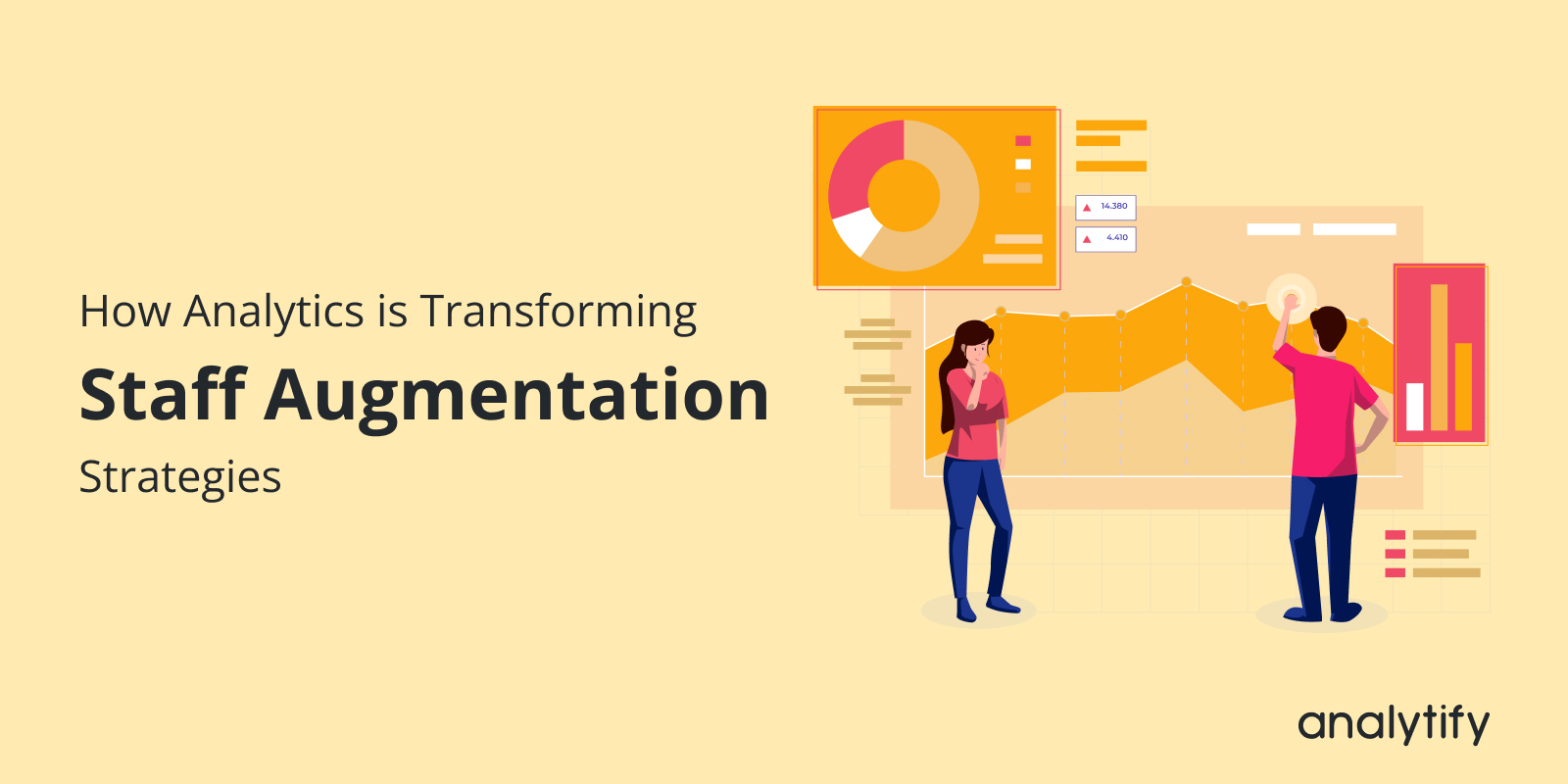
What is Staff Augmentation Analytics and How Does It Measure Team Success?

Staff augmentation lets businesses hire skilled professionals on a temporary or project basis. It fills skill gaps quickly without the cost and commitment of permanent hiring.
Workforce analytics makes staff augmentation more effective. It helps you find the right talent, track performance, and measure whether your augmented team is delivering real results.
In this blog post, I’m going to explain how analytics in staff augmentation works, which metrics to track, the tools to use, and how to measure team success accurately.
Staff Augmentation Analytics (TOC):
What Is Staff Augmentation?
Staff augmentation is an outsourcing model where businesses hire skilled external professionals to work alongside their in-house team. Unlike traditional hiring, it provides immediate access to specialized talent with no long-term commitment and lower overhead costs.
| Factor | Traditional Hiring | Staff Augmentation |
|---|---|---|
| Commitment | Long-term employment contract | Project-based or temporary contract |
| Speed | Weeks to months to onboard | Days to weeks to onboard |
| Cost | Salary + benefits + overhead | Lower overhead, pay for work delivered |
| Flexibility | Fixed headcount | Scale up or down as needed |
| Skill access | Limited by local talent market | Access to global specialized talent |
| Risk | High if hire is a poor fit | Lower; easier to end engagement |
Note: The global staff augmentation market is projected to grow significantly through 2031, driven by demand for specialized technical and digital skills that are difficult to hire for permanently.
The Role of Workforce Analytics in Staff Augmentation
Workforce analytics improves staff augmentation by helping businesses identify skill gaps, match the right talent to the right roles, track performance in real time, and measure the ROI of each augmented team member. It turns staffing solutions from guesswork into data-driven choices.
Without analytics, managing augmented teams is reactive. You notice problems after they affect the project. With analytics, you spot issues early and course-correct before they escalate.
| Analytics Capability | How It Helps Staff Augmentation |
|---|---|
| Workforce planning | Analyzes performance data to assess which roles need augmentation and when |
| Anticipating hiring needs | Predictive models help forecast future staffing requirements before gaps appear |
| Skill gap identification | Compares current skills against project requirements and industry benchmarks |
| Talent matching | Uses performance data to match the right external talent to the right roles |
| Staffing model selection | Analyzes which model (project-based, dedicated, on-demand) delivers the best ROI |
| Screening and shortlisting | Automated tools with NLP streamline resume review and candidate ranking |
| Predictive candidate matching | Historical success data builds models to predict which candidates will succeed |
| Performance monitoring | KPIs track the quality and output of augmented staff over time |
| Cost reduction | Analytics identifies where staffing costs can be reduced without sacrificing quality |
| Turnover prediction | Predictive models flag team members at risk of leaving so you can act early |
What Statistics Will Help Us?
We interviewed the Newwavedevs team responsible for IT staff augmentation and discussed several key statistical metrics with them. These statistical metrics use analytics to measure the efficiency and effectiveness of staff augmentation in supplementing the in-house team. By tracking these metrics, a business will be able to optimize its staff augmentation strategy, identify improvement areas, and make sure that it is getting the best return.
Key Metrics for Measuring Staff Augmentation Success
The most important metrics for staff augmentation success are communication responsiveness, time-zone overlap, alignment with project goals, autonomy index, KPI completion rates, and client satisfaction scores. Together these metrics give a complete picture of how well your augmented team is performing.
1. Communication Responsiveness
Communication responsiveness measures average response time in messaging tools and email.
Slow response times create project delays and hurt team momentum. Fast, reliable communication is a strong signal of team engagement.
Tools to track it:
- Slack analytics for message response times
- Microsoft Teams Insights for communication patterns
- Internal bots that log and report average response times
2. Time-Zone Overlap
Time-zone overlap measures how many working hours your in-house and augmented teams share each day.
Low overlap reduces collaboration and slows decision-making. Optimal overlap enables faster problem-solving and stronger team cohesion.
Positive effects of sufficient time-zone overlap:
- Knowledge sharing happens in real time rather than asynchronously
- Issues are addressed quickly instead of waiting for the next available window
- Team members interact more frequently, building stronger working relationships
- Collaborative problem-solving becomes easier when teams can discuss synchronously
How to track overlap:
- Jira and GitHub activity logs to see when work happens across time zones
- Meeting attendance and participation rates
- Engagement surveys to assess team cohesion
3. Project Alignment Metrics
Alignment metrics measure how well the augmented staff is contributing to overall project goals.
What to measure:
- Contribution to project milestones on time
- Quality of deliverables against defined standards
- Innovation contributions: ideas proposed and implemented
- Participation in team planning and review sessions
4. Autonomy Index
The autonomy index measures how often augmented staff request help versus executing tasks independently.
A high autonomy index indicates that the augmented team member is skilled, well-integrated, and productive without constant supervision.
How to measure it:
- Track frequency of escalations or help requests per week
- Compare output quality on independently completed tasks vs. assisted tasks
- Review task completion rate without managerial intervention
5. KPI Completion and Output Quality
Define clear KPIs for each augmented role before the engagement starts. Track them consistently throughout.
| Role Type | Example KPIs to Track |
|---|---|
| Developer | Lines of code reviewed, bugs fixed, sprint velocity, pull request merge rate |
| Content writer | Articles delivered per week, word count accuracy, revision rate, SEO performance |
| Digital marketer | Campaign traffic, conversion rate, cost per lead, CTR |
| Customer support | Tickets resolved per day, first response time, customer satisfaction score |
| Data analyst | Reports delivered on time, accuracy of analysis, stakeholder satisfaction |
6. Client and Stakeholder Satisfaction
Quantitative metrics alone do not tell the full story. Collect qualitative feedback regularly.
- Run monthly stakeholder surveys on augmented staff performance
- Use Net Promoter Score (NPS) for internal team satisfaction
- Conduct quarterly reviews with both the augmented staff and the client team
Risks and Ethical Considerations in Staff Augmentation Analytics
The main risks of analytics in staff augmentation are data privacy concerns, AI bias in screening tools, integration challenges, and transparency issues with external staff. Addressing these proactively protects both the business and the augmented team members.
| Risk | What It Means | How to Address It |
|---|---|---|
| AI bias in screening | AI tools trained on biased data can produce unfair hiring outcomes | Audit your screening tools regularly; use diverse training datasets |
| Data privacy | External staff accessing sensitive business data creates breach risk | Limit data access to role requirements; use NDAs and access controls |
| Lack of transparency | Augmented staff may not know they are being monitored or how | Be clear about what is tracked, why, and how the data is used |
| Integration challenges | Augmented staff may use different tools or workflows than your team | Standardize tooling and onboarding before work begins |
| Cultural and communication gaps | Different communication styles and time zones can hinder collaboration | Set communication norms and overlap expectations from day one |
| Accountability gaps | Unclear ownership of deliverables leads to missed deadlines | Assign clear owners for every task and milestone |
Note: Privacy compliance is not optional. Any data collected on augmented staff must comply with relevant regulations, including GDPR, CCPA, and any local employment laws in the staff member’s region.
How Analytify Helps You Measure Augmented Team Performance on Digital Projects
Join 50,000+ beginners & professionals who use Analytify to simplify their Google Analytics!
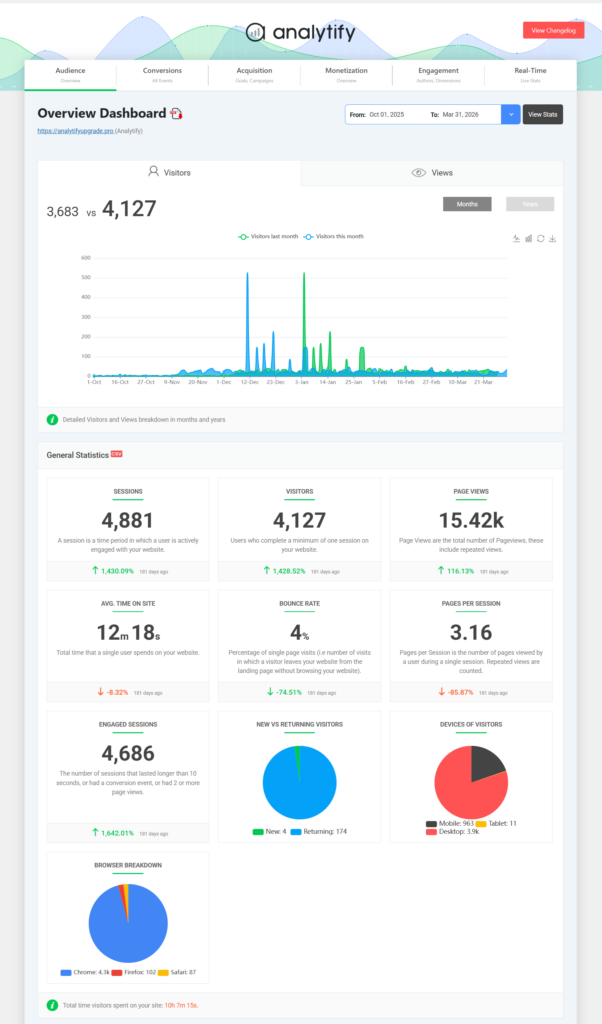
Analytify tracks the digital performance impact of your augmented team inside WordPress. It measures website traffic, user engagement, conversion rates, and campaign ROI, giving you data to evaluate whether your augmented staff is delivering results on digital projects.
If your augmented team works on your website, content, or digital campaigns, Analytify connects their work directly to measurable outcomes.
| Analytify Feature | How It Measures Augmented Team Impact |
|---|---|
| Real-Time Traffic Dashboard | Monitor website performance immediately after augmented staff publish or update content |
| Engagement Metrics | Track bounce rate, session duration, and pages per session to evaluate content quality |
| Conversion Reports | Measure whether campaigns and content created by augmented staff drive goal completions |
| Campaign Tracking (UTM) | Track the ROI of specific marketing campaigns run by augmented team members |
| Search Term Dashboard | See whether SEO work by augmented staff improves keyword rankings and organic traffic |
| Top Pages Report | Identify which pages created or updated by augmented staff perform best |
| WooCommerce Tracking | Measure sales and revenue impact of augmented ecommerce or product team members |
Four ways Analytify adds value to staff augmentation management:
- Monitor web performance of augmented staff in real time, including page visits, engagement, and conversions.
- Streamline reporting by surfacing GA4 data inside your WordPress dashboard, so you can evaluate team impact quickly.
- Improve outcomes by identifying which content or campaigns are underperforming and need attention.
- Assess ROI by connecting traffic, engagement, and conversion data directly to the work your augmented team delivers.
Tip: After your augmented team publishes new content or launches a campaign, check Analytify’s real-time dashboard immediately. Traffic and engagement data shows within minutes whether the work is performing as expected.
Staff Augmentation Analytics (FAQs)
1. What is staff augmentation analytics?
Staff augmentation analytics is the use of data tools and techniques to optimize how external professionals are integrated into a team. It covers identifying skill gaps, matching talent to roles, tracking performance with KPIs, and measuring the ROI of augmented staff. The goal is to make staffing decisions with data, not assumptions.
2. How does staff augmentation benefit businesses?
The main benefits of staff augmentation are:
Immediate access to specialized skills without a long hiring process
Lower overhead costs compared to full-time employment
Flexibility to scale headcount up or down based on project needs
Access to global talent that may not be available locally
Reduced hiring risk because engagements can be ended more easily than permanent roles
3. What metrics are used in staff augmentation analytics?
The key metrics for staff augmentation analytics are:
Communication responsiveness: average response time in messaging and email
Time-zone overlap: hours per day that internal and external teams work together
Alignment metrics: contribution to project milestones and goals
Autonomy index: ratio of independent work to help requests
KPI completion rate: percentage of agreed deliverables completed on time and to standard
Client satisfaction: stakeholder ratings and feedback on augmented staff quality
4. How can analytics improve staff augmentation?
Analytics improves staff augmentation in four main ways. First, it identifies skill gaps before they affect projects. Second, it matches candidates to roles using performance data rather than just resumes. Third, it tracks real-time performance so problems are caught early. Fourth, it measures ROI so businesses know whether their staffing investment is paying off.
5. What are the challenges of using analytics in staff augmentation?
The main challenges are:
AI bias: screening tools can perpetuate existing biases if not audited regularly
Data privacy: external staff accessing business data creates security and compliance risks
Transparency: augmented staff must understand what is being tracked and why
Integration: aligning tools and workflows across internal and external teams takes time
Cultural gaps: different communication styles and time zones can reduce collaboration quality
6. How does staff augmentation differ from traditional hiring?
Staff augmentation is temporary and project-based. It provides immediate access to skills without a long-term employment commitment. Traditional hiring is permanent, slower, and carries higher overhead costs including benefits and fixed salaries. Staff augmentation is best when you need a specific skill for a defined period. Traditional hiring is better when you need a role filled permanently within your organization.
Final Thoughts: Using Workforce Analytics to Get More from Staff Augmentation
Staff augmentation gives businesses access to the talent they need, when they need it. Workforce analytics makes that investment measurable and manageable.
Key takeaways:
| Action | Why It Matters |
|---|---|
| Define KPIs before the engagement starts | Sets clear expectations and gives both sides a shared definition of success |
| Track communication responsiveness and time-zone overlap | Catches collaboration problems before they delay projects |
| Monitor autonomy index and alignment metrics | Shows whether augmented staff are truly integrated and contributing independently |
| Audit AI screening tools for bias | Ensures fair and effective candidate selection |
| Use Analytify for digital performance tracking | Connects augmented team work to measurable website and campaign outcomes |
| Collect regular stakeholder feedback | Quantitative data alone does not capture quality; qualitative input is essential |
Analytics does not just measure staff augmentation. It makes it better. Teams that track the right metrics consistently get more from their augmented talent and make smarter staffing decisions over time.
You may also like to read:
- How to Build a Website Analytics Dashboard for Your Business
- Google Analytics for Beginners (Updated Guide 2025)
- How To Add Google Analytics 4 to WordPress (Easy Way)
Now we’d love to hear from you. How are you using analytics to optimize your augmentation strategy and boost your team’s performance? Leave a comment below.