SEO Translation vs. Localization: Why Language Skills Make the Difference

SEO translation converts your content from one language to another while keeping it optimized for search engines. Localization goes further. It adapts the content to fit the culture, values, and expectations of a specific region.
Both are essential for global marketing. But they serve different purposes, and using one without the other is a common reason businesses fail in international markets.
In this guide, I’ll explain the difference between SEO translation vs localization, the key techniques for each, the language skills required, and how to measure your results.
SEO Translation vs Localization (TOC):
What Is the Difference Between SEO Translation vs Localization?
SEO translation converts content into another language while preserving keyword optimization, meta tags, and search intent. Localization adapts the content to fit the cultural context of a specific region, including idioms, tone, imagery, date formats, and local search behavior.
Once your translated and localized pages are live, you’ll want to track how each version performs. Our guide on How to Set Up Google Analytics 4 and Connect it to Your WordPress Site? walks you through configuring GA4 so you can measure traffic and engagement across every market.
| Factor | SEO Translation | Localization |
|---|---|---|
| Definition | Translating content from one language to another while maintaining SEO elements | Adapting all content to fit the cultural and regional expectations of a local audience |
| Scope | Language and keywords | Language, culture, tone, imagery, formats, and local customs |
| Goal | Rank in search engines in the target language | Make content feel native and natural to a local audience |
| Keyword approach | Translate and localize keywords for local search behavior | Research entirely new local keywords based on how that market searches |
| Content changes | Text is translated; structure stays the same | Text, examples, images, date formats, and CTAs may all change |
| Who does it | Bilingual SEO specialist or professional translator | Localization team with deep cultural knowledge and native fluency |
| When to use | Launching in a new language market | Launching in a new cultural market where audience expectations differ significantly |
A simple example: translating your homepage into French is SEO translation. Rewriting it to resonate with French-Canadian values, local slang, and regional holidays is localization.
Why Language Skills Are Critical for SEO Translation and Localization
Strong language skills are the foundation of effective SEO translation and localization. Native fluency allows translators to capture idioms, tone, and cultural nuance that direct translation misses. These details directly affect how content performs in search and how audiences respond to it.
1. Native-Level Fluency in the Target Language
Native speakers understand the small details that matter: slang, regional accents, formal vs. informal register, and culturally specific references.
Non-native translators often produce content that is technically correct but sounds unnatural. Unnatural content loses credibility and increases bounce rate, both of which hurt search rankings.
Using an English learning app can help non-native professionals get closer to this level of fluency by practicing real-world language and cultural nuances. This kind of focused practice helps you understand the tone and style better, making it easier to adjust content in an authentic way.
What native fluency enables:
- Adapting marketing messages to match local customs and expectations
- Choosing the right tone for the audience, formal, casual, or technical
- Catching idiomatic phrases that do not translate directly
- Understanding how the local audience searches for information
2. Cultural Awareness
Language and culture are inseparable. The same phrase can mean different things in different cultures.
Colors, symbols, humor, and references all carry cultural weight. Content that ignores this risks feeling out of place or, worse, causing offense.
| Cultural Element | Why It Matters for SEO Content |
|---|---|
| Humor and tone | What is funny in one culture can be inappropriate in another |
| Colors and symbols | Red means luck in China; it signals danger or alerts in Western markets |
| Date and number formats | MM/DD/YYYY vs. DD/MM/YYYY; comma vs. period as decimal separator |
| Measurement units | Imperial vs. metric affects product descriptions and guides |
| Currency and pricing | Local currency and pricing conventions must match local expectations |
| Images and examples | Stock images, case studies, and examples must reflect the local context |
3. Balancing Translation and Localization
Not every piece of content needs full localization. The level of adaptation depends on the content type.
| Content Type | Approach Needed |
|---|---|
| Legal documents, technical specs | Precise translation with minimal adaptation |
| Product descriptions | Translation plus local terminology and unit conversions |
| Blog posts and guides | Translation plus cultural adaptation of examples and tone |
| Marketing copy and landing pages | Full localization: rewrite for local audience, not just translate |
| Social media content | Full localization: use local trends, language, and references |
What Is SEO Translation?
SEO translation is the process of converting content from one language to another while maintaining its search engine optimization. This includes translating keywords for local search behavior, optimizing meta tags in the target language, and adapting URLs and heading structures for local search engines.
SEO translation is not word-for-word translation. A direct translation of a keyword often produces a phrase that no one in the target market actually searches for.
The goal is to identify what the local audience searches for and translate the content to match that intent, not just the words.
SEO Translation Techniques
The five core SEO translation techniques are: keyword research in the target language, on-page optimization of translated elements, content adaptation for cultural relevance, technical SEO alignment, and local link building. Apply all five for maximum search visibility in a new market.
1. Keyword Research in the Target Language
Do not translate your existing keywords directly. Research how your target audience actually searches in their language.
Steps to follow:
- Identify the core topics your content covers.
- Use keyword research tools (Google Keyword Planner, Ahrefs, Semrush) in the target language.
- Check local search volume, competition, and intent for each term.
- Select keywords that match how the local audience searches, not literal translations.
2. On-Page Optimization of Translated Content
Every translated page needs the same on-page SEO attention as your original content.
Elements to optimize in the target language:
- Title tag: include the local keyword near the front
- Meta description: write a compelling description that matches local search intent
- URL structure: use clean, keyword-rich URLs in the local language
- Heading hierarchy: H1, H2, and H3 should all include relevant local terms
- Alt text for images: describe images in the target language with relevant keywords
3. Content Adaptation for Cultural Relevance
Translated content must also be adapted to feel natural to the local reader.
Common adaptations required:
- Replace English-language idioms with culturally appropriate equivalents
- Use local terminology that the audience recognizes
- Update examples, case studies, and statistics to use local references
- Adjust tone to match local communication norms (formal vs. informal)
4. Technical SEO for Translated Content
The technical structure of your translated site affects how search engines crawl and rank it.
Key technical considerations:
- Use hreflang tags to signal language and regional targeting to Google
- Create separate URLs for each language version (e.g., /fr/ for French)
- Ensure page speed is consistent across all language versions
- Submit language-specific sitemaps to Google Search Console
- Make sure the mobile experience is optimized for each regional version
5. Local Link Building
Backlinks from local websites signal authority and relevance to regional search engines.
How to build local links:
- Reach out to local bloggers, publishers, and industry sites in the target region
- Contribute guest posts to local publications in the target language
- Get listed in local directories and regional business associations
- Earn mentions from local influencers and media outlets
Common Mistakes to Avoid in SEO Translation
The most common SEO translation mistakes are: using direct word-for-word translation, skipping local keyword research, ignoring cultural sensitivities, failing to test after launch, and working without SEO expertise on the translation team.
| Mistake | Why It Hurts | How to Fix It |
|---|---|---|
| Word-for-word translation | Content sounds unnatural and may not match local search terms | Research local keywords and adapt phrasing to feel native |
| Skipping keyword research | You optimize for terms no one in that market searches for | Always research keywords in the target language separately |
| Ignoring cultural sensitivities | Content feels irrelevant or causes offense | Work with native speakers who understand local culture |
| No testing after launch | Problems go undetected and performance suffers | Monitor rankings, traffic, and engagement after each launch |
| No SEO expertise on the team | Translation may be linguistically correct but not search-optimized | Pair translators with SEO specialists for best results |
What Is Localization and Why Is It Important?
Localization is the process of adapting content to meet the cultural, linguistic, and practical expectations of a specific market. It goes beyond translation to include tone, imagery, date formats, currency, humor, and local references. The goal is to make content feel like it was created for that market, not just translated for it.
When localization is done well, users do not notice it. The content simply feels natural and relevant.
When it is done poorly, users immediately sense that something is off. This leads to high bounce rates, low trust, and poor conversion rates.
Key Elements of Effective Localization
| Element | What Localization Changes |
|---|---|
| Language and tone | Register, formality level, idioms, and natural phrasing for the local audience |
| Cultural references | Examples, humor, analogies, and stories that resonate locally |
| Visuals and imagery | Images, icons, and colors that align with local cultural norms |
| Date, time, and number formats | Local conventions for dates, times, currencies, and measurements |
| CTAs and offers | Phrasing and promotions that match local buying behavior |
| Legal and compliance content | Terms, policies, and disclosures adapted for local regulations |
Challenges in the Localization Process
Localization is resource-intensive. These are the most common challenges:
- Requires deep cultural knowledge, not just language skills
- Takes longer and costs more than basic translation
- Mistakes can damage brand reputation in new markets
- Content management becomes more complex with multiple localized versions
- Quality assurance requires native speakers to review final output
Note: Localization errors are not just embarrassing. In some cultures, a mistranslated phrase or inappropriate image can seriously harm brand credibility. Always have content reviewed by a native speaker before publishing.
How Analytify Helps You Measure SEO Translation and Localization Performance
Join 50,000+ beginners & professionals who use Analytify to simplify their Google Analytics!
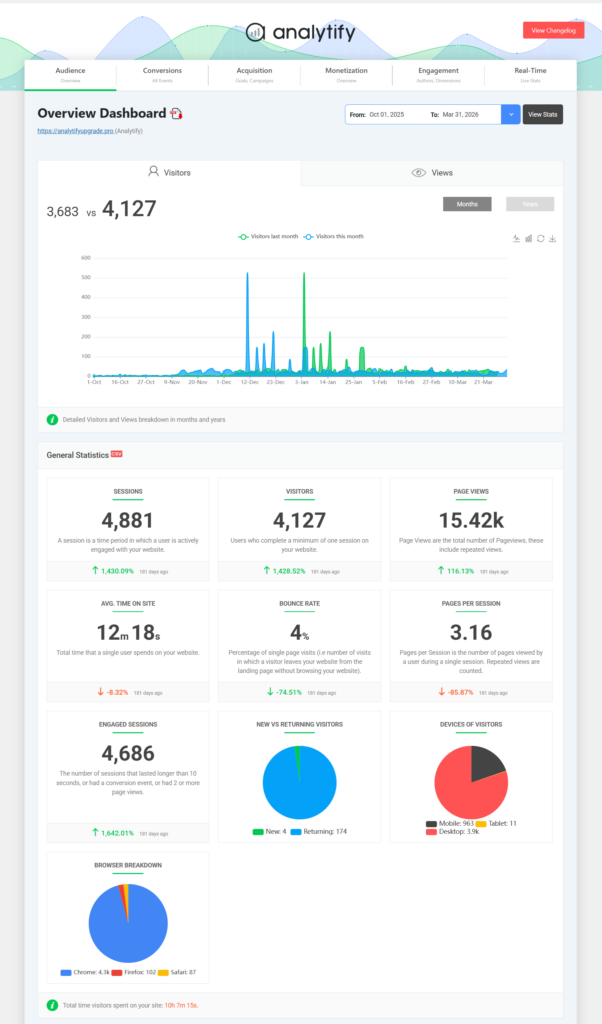
Analytify tracks how each localized version of your site performs in different regions. It shows traffic by language, keyword performance by market, user engagement by location, and real-time data across all localized pages, all inside your WordPress dashboard.
Launching in a new language market is only half the work. You need data to know whether your SEO translation and localization efforts are actually driving results.
Here’s how Analytify can help:
1. Track Multilingual Page Performance
Analytify shows how each language version of your site performs separately.
Metrics to monitor per language version:
- Traffic volume by language or regional URL
- Bounce rate for each localized page
- Time on page and scroll depth
- Conversion rate per region
Read how to set up a multilingual ecommerce site.
2. Analyze Keyword Performance by Market
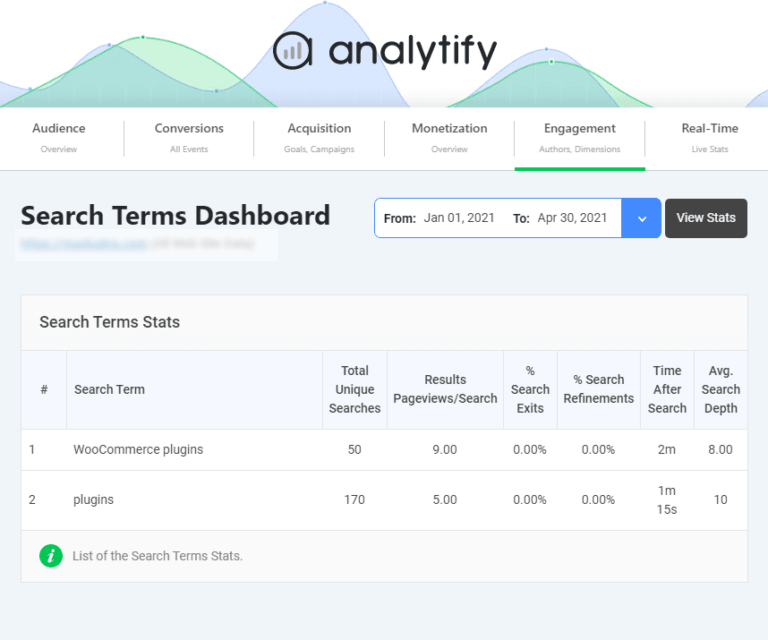
Analytify integrates with Google Analytics to show how your localized keywords are performing.
- See which search terms drive traffic in each target market
- Identify keywords with high impressions but low CTR (optimization opportunities)
- Track ranking changes after you publish localized content
3. Monitor User Engagement Across Regions
Analytify tracks behavior metrics for each region separately.
- Compare bounce rate between localized and non-localized versions
- Identify which regions have the highest session duration
- Find content that resonates well in one market but underperforms in another
4. Track Regional Traffic Sources
Analytify shows where your visitors come from geographically.
- See which countries and cities send the most traffic to each language version
- Identify regions where localization is driving growth
- Spot regions where you have visibility gaps and need stronger local content
5. Real-Time Analytics After Launch
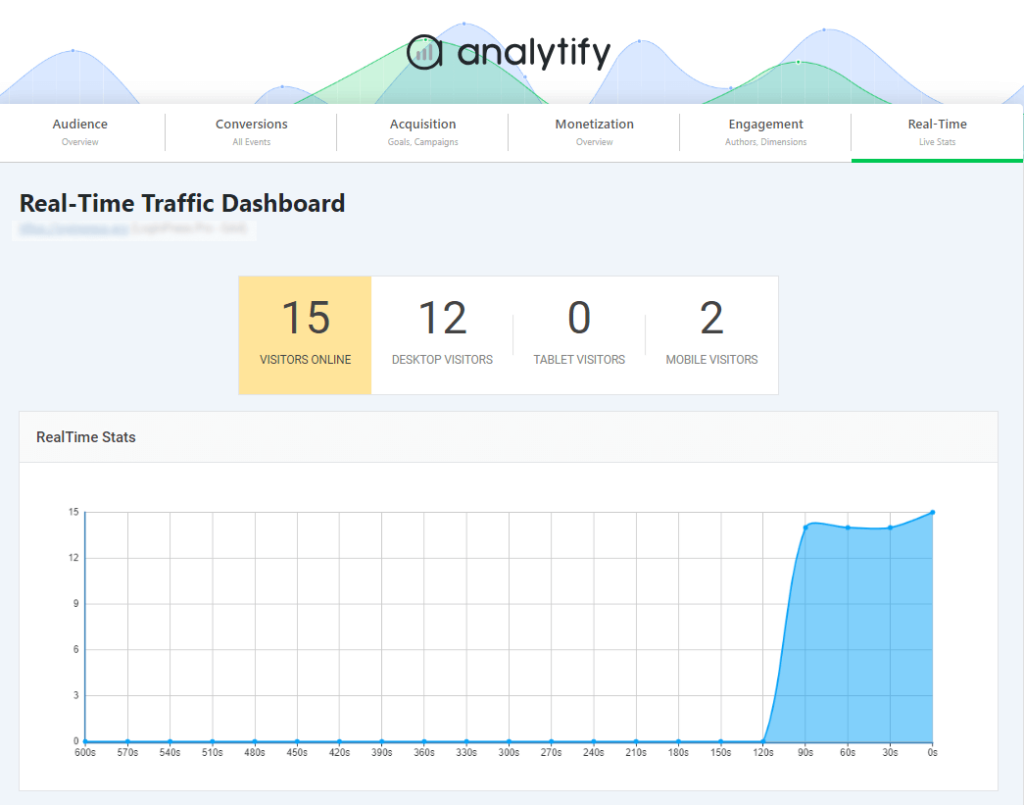
When you publish new localized content, Analytify shows performance data immediately.
You can catch problems early, such as high bounce rates or low engagement, and make adjustments before they affect rankings.
| Analytify Feature | How It Supports Localization Measurement |
|---|---|
| Traffic Source Reports | Shows which regions send traffic to each localized version |
| Search Term Dashboard | Tracks keyword performance per language and market |
| Real-Time Dashboard | Monitors performance immediately after publishing localized content |
| Engagement Metrics | Compares bounce rate and session duration across regions |
| Geographic Dashboard | Maps visitor location data to evaluate regional reach |
| Top Pages Report | Identifies best-performing localized pages for replication |
Frequently Asked Questions: SEO Translation vs Localization
1. What is the difference between SEO translation and localization?
SEO translation converts content into another language while preserving keyword optimization and meta tags. Localization goes further and adapts the content to fit the cultural, regional, and behavioral expectations of the target audience. Translation changes the language; localization changes the experience.
2. Why is SEO translation important for global businesses?
SEO translation is essential for global businesses because it allows content to rank in search engines in multiple languages. Without it, translated content may not match what local users search for, resulting in low visibility and traffic. A business expanding into France, for example, needs content optimized for French search terms, not just word-for-word translations of English keywords.
3. How can Analytify help with SEO translation and localization?
Analytify simplifies performance tracking by integrating Google Analytics into your website, allowing you to monitor how your localized content is performing in different regions. It helps you track important metrics such as traffic sources, user engagement, keyword rankings, and conversions, making it easier to assess the effectiveness of your SEO translation and localization efforts in real-time.
4. What are some common mistakes in SEO translation?
The most common mistakes in SEO translation are: word-for-word translation without cultural adaptation, using keywords that no one in the target market actually searches for, ignoring cultural sensitivities that make content feel offensive or out of place, and launching without testing or measuring performance. Working with bilingual SEO specialists rather than general translators helps avoid most of these errors.
5. How does localization affect SEO performance?
Effective localization improves SEO performance in three ways. First, content that feels culturally relevant reduces bounce rate, which is a positive ranking signal. Second, locally adapted content earns more backlinks from regional publications. Third, using terms and phrases that match how local audiences search increases organic visibility. Poor localization does the opposite: high bounce rates, low engagement, and declining rankings in the target market.
6. How often should I review my SEO translation and localization efforts?
Review localized content at least quarterly. Search behavior changes over time, and keywords that performed well six months ago may have shifted. Additionally, cultural context evolves, especially around seasonal events, local trends, and current events. Use Analytify’s regional traffic and engagement reports to identify which localized pages are declining in performance and prioritize them for refresh.
Final Thoughts: Getting SEO Translation and Localization Right
SEO translation vs localization is not an either-or choice. Both are essential for successful global marketing.
Quick summary:
| If you need to… | Use… |
|---|---|
| Rank in a new language on search engines | SEO Translation |
| Make content feel native to a local culture | Localization |
| Expand into a completely new cultural market | Both, together |
| Measure which localized pages are working | Analytify regional analytics |
The businesses that succeed globally are those that invest in both language accuracy and cultural relevance. Speaking your audience’s language is not enough. You need to speak in a way that resonates.
You may also like to read:
- 15+ Best Practices for WordPress SEO to Improve Search
- How To Master AI Search Engine Optimization
- Future Of SEO: 5 Key SEO Trends
Have questions about SEO translation vs localization? Leave a comment below.