
How to View WooCommerce Stats Within Your WordPress Dashboard
After successfully setting up the WooCommerce tracking inside your Google Analytics account, you can access the WooCommerce stats tracked by Google Analytics within your WordPress Dashboard using Analytify.
When it comes to monitoring the performance of your WooCommerce store, Google Analytics, integrated with the Analytify dashboard, provides a wealth of data. This combination gives you a comprehensive view of how your online store is performing, what’s working, and what might need tweaking.
Let’s learn how to watch WooCommerce Stats inside your WordPress site and in Google Analytics.
1. View WooCommerce Stats Inside your WordPress Dashboard
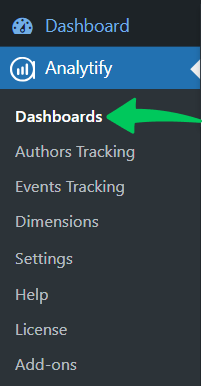
In order to access the WooCommerce Dashboard, you need to login to your WordPress site. Then, go to Analytify >> Dashboards.
Inside the dashboard, you’ll see Monetization tab. Click on it to head over to WooCommerce dashboard.
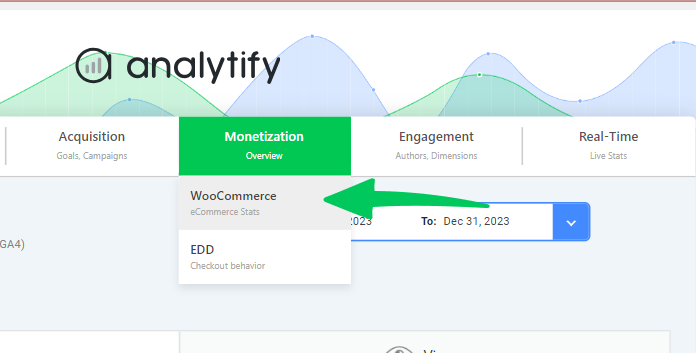
Here, you can watch your WooCommerce Analytics stats tracked by Google Analytics.
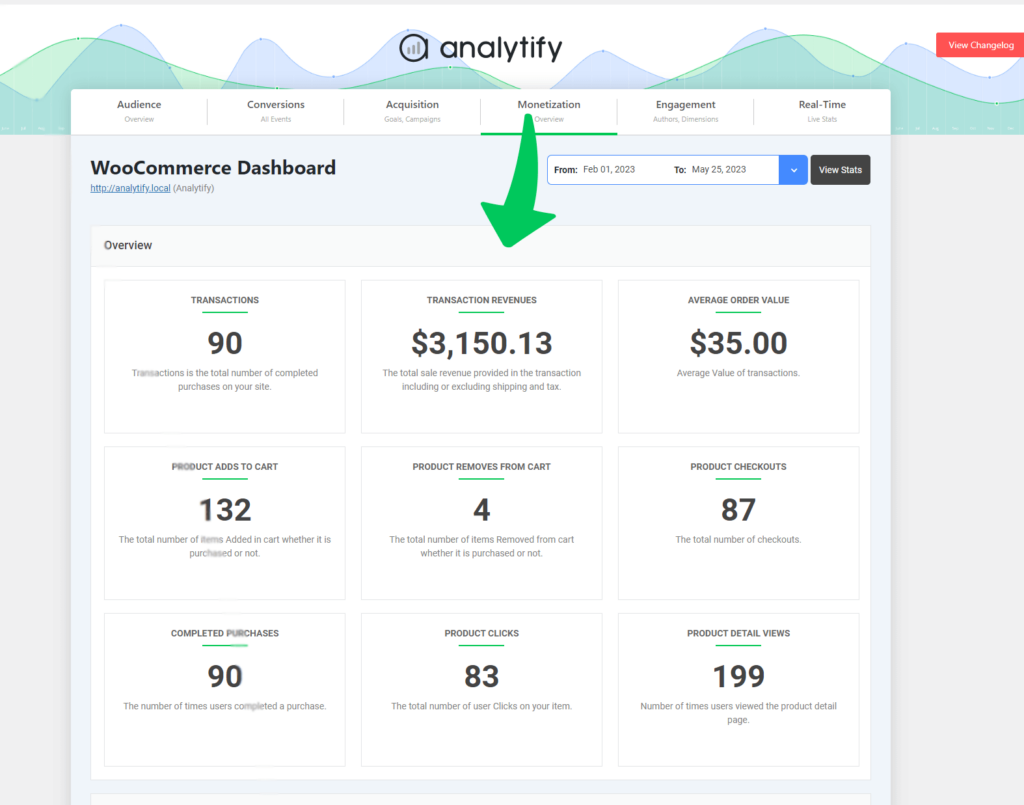
Let’s explain some of the key WooCommerce Analytics stats that are tracked by Google Analytics and displayed in your Analytify dashboard.
- Revenue Tracking: See the total Transaction Revenue generated in a specified time period.
- Transactions: Track the number of completed purchases.
- Average Order Value (AOV): Understand the average value of each transaction.
- Product Checkout: Check the total number of checkout.
Alongside the Refund Rate, you can now track:
- Total Refunded: The cumulative monetary value returned to customers.
- Refunded Orders: The specific count of orders that were processed as refunds.

2. View WooCommerce Stats Inside Google Analytics Account
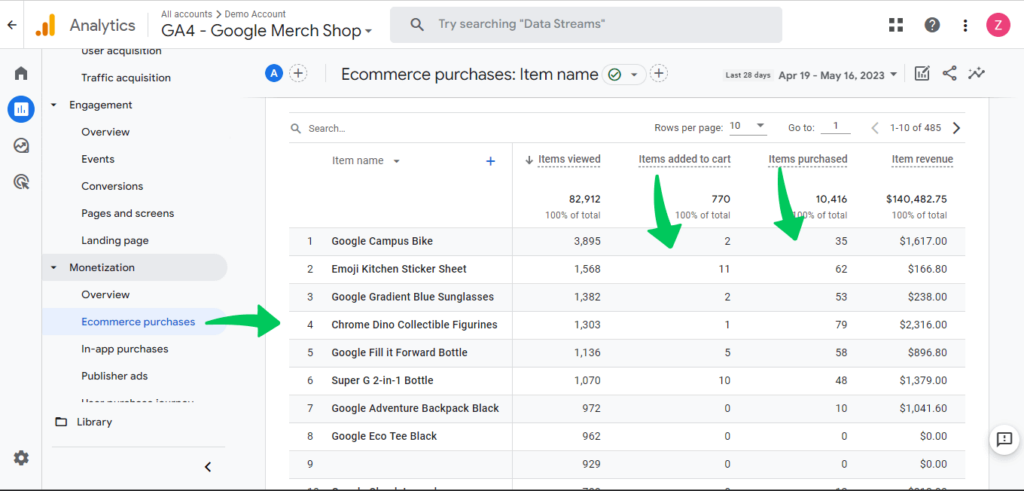
To track Ecommerce purchases in GA4, navigate to Monetization >> Ecommerce purchases.
You can see Items viewed, Items purchased, Items revenue, and many more metrics.
3. View WooCommerce First Purchase Stats Inside Your WordPress Dashboard
Analytify also offers first-purchase reporting, providing a complete view of how your customers move from initial product discovery to final checkout.
Product Performance and Category Analysis
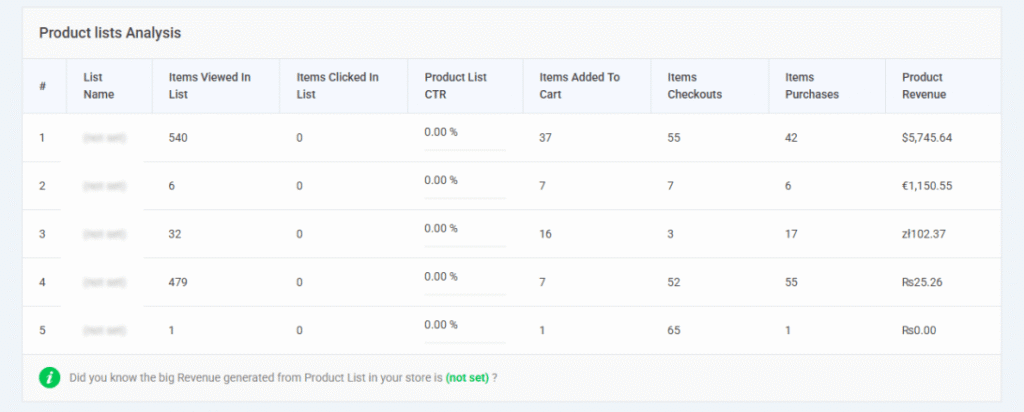
To understand which specific items are driving your growth, use the Products Performance and Product Categories Analysis tables.

These go beyond simple sales numbers by providing intent metrics:
| Metric | Description |
| Cart-to-Detail Rate | The percentage of users who added a product to their cart after viewing the product page. |
| Buy-to-Detail Rate | The percentage of users who purchased a product after viewing it. |
| Quantity | The total number of units sold for that specific product. |
Coupons Analysis
Track the effectiveness of your marketing campaigns in the Coupons Analysis section.

This table lists every Coupon Code used in your store, the total Revenue it generated, and the number of Transactions linked to it.
If this section shows No Activity, it means no coupon codes were applied during the selected time period.
That’s all!
You may also like to know How to Find Enhanced Ecommerce Reports in Google Analytics.
If you have any queries regarding the WooCommerce Tracking addon, look at the FAQs on the Analytify website or contact the Analytify support team.