
How to Enable Gravity Forms Submission Tracking
Google Analytics 4 does not automatically track Gravity Forms submissions. You need the Analytify Forms Tracking add-on to capture form impressions and conversions without writing any code.
This guide walks you through enabling Gravity Forms tracking in Analytify and verifying the setup in GA4.
Gravity Forms submission tracking can be complicated and takes a lot of practice. Google Analytics does not automatically track Gravity Forms after submission. Furthermore, tracking form conversions with Google Tag Manager can be time-consuming and error-prone. This can be difficult depending on analytics skills and form configuration.
But what if we tell you an easy way? Imagine tracking your Gravity Forms conversions all on your own with just a few simple clicks.
In this article, we’ll show you how to set up Gravity Forms Tracking without having to write any code.
Does Google Analytics offer Gravity Forms Submission Tracking?
Yes, Google Analytics can track form submissions, including those from Gravity Forms, but it requires manual setup and more advanced knowledge of Google Analytics.
Gravity Forms does not automatically send events to Google Analytics when a form is submitted. Instead, you have to set this up manually by using Google Tag Manager on your website to send an event when the form is submitted. This can be technical and complicated for users unfamiliar with these tools.
This is where Analytify comes in. Analytify is a WordPress plugin that simplifies Google Analytics and puts it directly into your WordPress dashboard. It provides enhanced tracking features and makes it much easier to track events, like Gravity Forms submissions, without having to deal with the complexities of Google Analytics.
Let’s learn how to setup Gravity Forms Submission tracking.
Requirements
Before proceeding forward, kindly make sure to double-check the following requirements:
- Analytify Pro Plugin installed on your WordPress site.
- Forms Tracking Addon installed and activated.
Enable Gravity Forms Submissions Tracking
Assuming that you have activated the Forms tracking add-on by Analytify, here’s the process to Enable Gravity Forms Tracking:
To enable Gravity Forms Tracking in Analytify, navigate to Analytify >>Settings in your WordPress admin dashboard.
Then, head toward Tracking >> Forms Tracking as shown below:
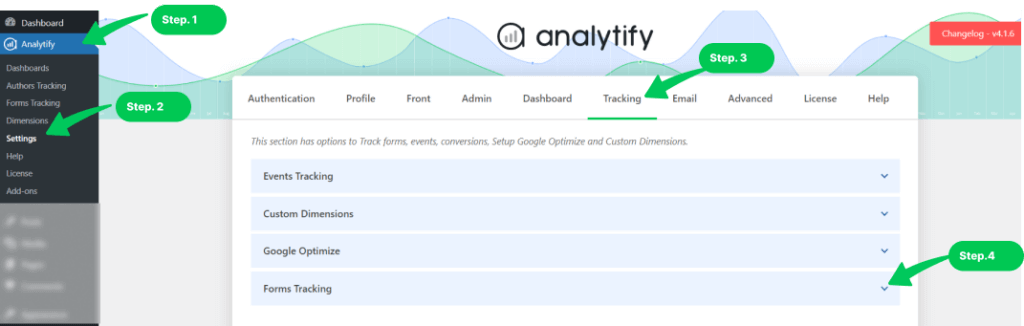
On clicking the Forms Tracking, a new window opens with a list of WordPress Forms Plugins.
Simply Enable Tracking for Gravity Forms and click Save Changes.
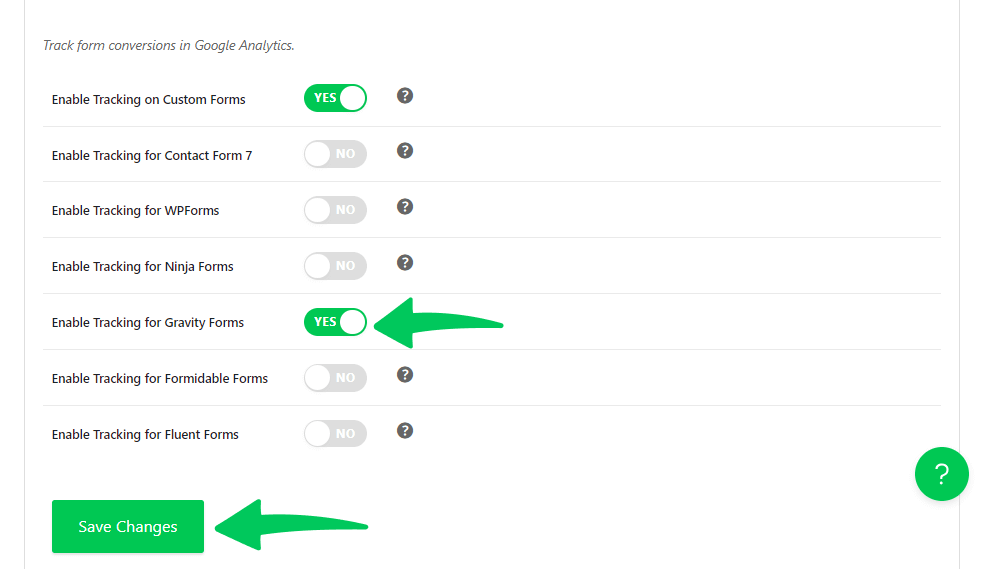
Once these steps are done, Analytify will automatically start keeping track of your Gravity Forms changes.
Note: Remember that you’ll have to wait a while to see your reports because Google Analytics usually takes 24 to 48 hours to track events like form actions.
View Gravity Forms Tracking Reports in Analytify
The Forms Tracking add-on of Analytify not only makes it easier to set up Gravity Forms tracking, but it also makes it easier to report on form data.
With the Forms Tracking Dashboard inside your WordPress, you can track and analyze form submissions, conversion rates, and other relevant metrics for your website’s forms.
Within the Analytify dashboard, there is a simple way to view your Forms conversion stats in WordPress.
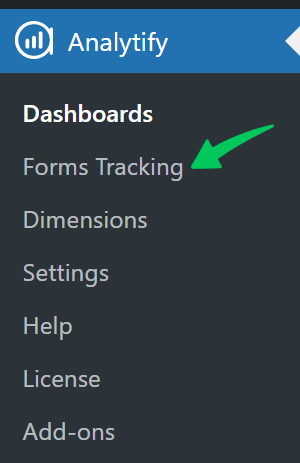
- Hover to Analytify from the left side of the WordPress dashboard menu. And click Forms Tracking.
2. Then, under the Conversions option, you can see the Gravity Forms Tracking Analytics report.
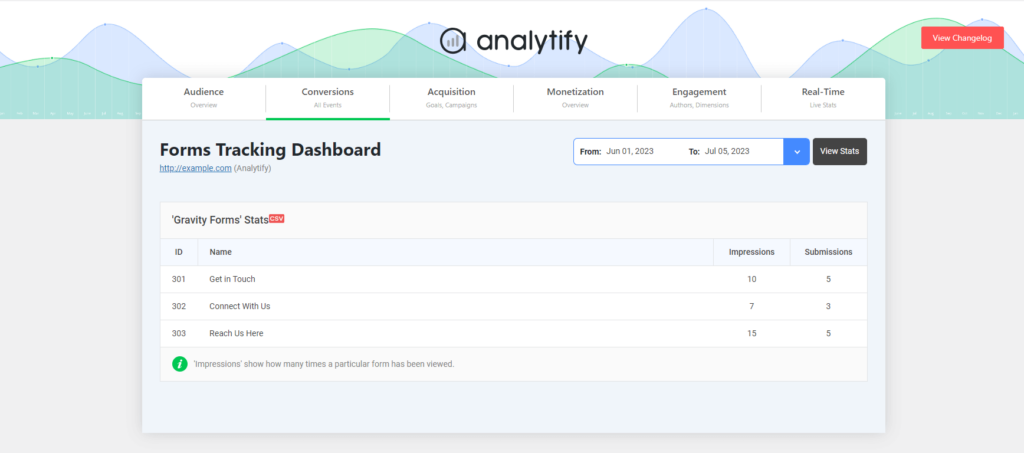
It lets you see your form metrics in real time right in your WordPress dashboard, so you don’t have to leave your WordPress admin area.
The report shows the Gravity Forms Submission Tracking on your website, along with the number of Impressions.
Troubleshooting Gravity Forms Tracking
If your Gravity Forms impressions or submissions aren’t appearing in your reports, you can follow these steps below to verify your setup and troubleshoot easily:
1. Use the Test Page Method
Avoid testing on a live or high-traffic page. Instead, create a controlled environment:
- Create a Test Page: Set up a private page in WordPress.
- Add a Multi-Step Form: Use a 3-step Gravity Form for testing.
The Goal: A multi-step form helps you verify whether tracking captures:
- Each step impression (Step 1, Step 2, Step 3)
- The final submission event.
2. Perform a Clean Test Submission
To ensure accurate testing without affecting your analytics data:
- Open the test page in an Incognito/Private browser window
- Complete all steps of the form
- Click Submit
Note: Do not refresh the page or click “Back” during the process, as this can trigger duplicate impression events.
3. Verify Data in GA4 Realtime
You don’t have to wait 24 hours to see if the technical connection is working.
- Open your Google Analytics 4 dashboard >> Reports >> Realtime.

- Look for the following events in the Event count card:

- 3 Impression Events: You should see one for each step of your form.
- 1 Submission Event: This triggers only after the final “Submit” button is clicked.

- Check the Parameters: Click on an event to see the form_id and form_name. This confirms that Analytify is passing the exact data you need.

4. Wait For The GA4 Processing Window
If you don’t see data in Analytify immediately, this is normal.
GA4 Realtime shows data instantly
Analytify relies on GA4’s processed data
Processing time:
Typically, 12 to 24 hours
If events appear in Realtime but not in Analytify yet, your setup is working correctly.
5. Final Verification in Analytify
After 24 hours, navigate to Analytify >> Forms Tracking. You should now see your test form listed with the correct number of impressions and conversions.

With this information, you can keep track of form changes and see which forms work well and which don’t. If you have any doubts or questions related to this matter, please don’t hesitate to contact our support team.