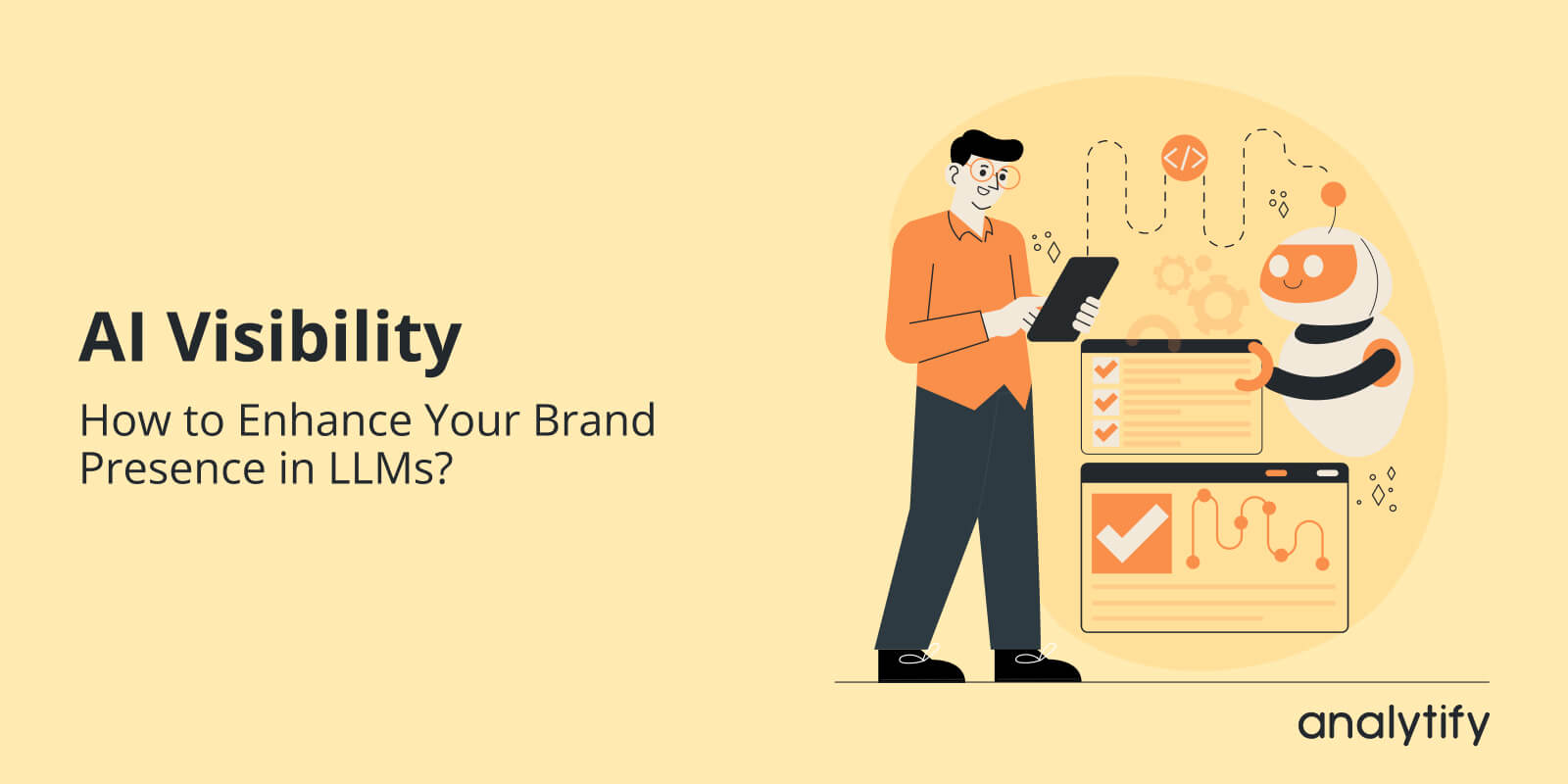
AI Visibility: How to Enhance Your Brand Presence in LLMs?

AI visibility is how visible your brand is in the answers of AI tools like ChatGPT and Google’s AI.
More users now turn to AI tools when they look for information, and brands need to appear in the responses those tools generate.
Your brand has AI visibility when AI systems mention it as they answer questions, recommend products or provide insights. AI-generated answers can shape how consumers view your brand before they visit your website. For Google’s AI Overviews and AI Mode, Google states there are no additional technical requirements beyond being indexed and eligible to appear in Google Search with a snippet, and no special schema.org structured data is needed.
I explain why AI visibility matters, how to improve it, and how to monitor your brand’s visibility in AI responses with GA4 and Analytify. This guide is for marketers and site owners who want their brand to appear in AI answers.
AI Visibility (TOC):
What is AI Visibility in LLMs?
AI search visibility refers to how your brand shows up in AI-generated content, particularly in Large Language Models (LLMs) like ChatGPT or Google AI. These tools are now widely used for information retrieval and content generation. They analyze data and produce responses based on the information they’ve been trained on, and businesses need to ensure their brand is part of that conversation.
When users search for information or ask questions to AI models, the results are not just pulled from search engines anymore. Instead, AI models generate content, often pulling from a wide range of sources, including websites, blogs, articles, and even product reviews. Therefore, LLM visibility is about making sure your brand appears in these responses, whether directly mentioned or implied.
The Growing Role of AI Tools in Information Retrieval
AI tools like Google AI, ChatGPT, and other Large Language Models (LLMs) are rapidly transforming how information is retrieved and presented to users. In the past, Google search and other search engines simply displayed links to relevant webpages. Now, however, AI models are becoming an integral part of the search experience, providing direct answers and summaries in the search results.
When users perform a search on Google, they can see summary features like:
- Featured snippets: These are special boxes that show an excerpt from a web page first in the search result. Google’s systems choose which pages appear as featured snippets.
- AI-generated summaries: For certain search queries, Google will display a detailed AI-generated summary of relevant content, essentially answering the user’s question without needing to visit an external site.
- Google’s AI Overviews: AI Overviews summarize a complicated topic in Google Search results. Google also offers AI Mode for queries that need further exploration, reasoning or comparison.
Why AI Visibility Matters
AI visibility is important for businesses because AI-generated content is becoming one of the first places people turn to for information. When users search for answers, they often rely on AI tools to provide quick, accurate responses. If your brand isn’t visible in these AI-generated responses, you could be missing out on significant opportunities to engage with potential customers.
This is especially important for industries where consumer decisions are heavily influenced by AI-generated content, such as reviews, product recommendations, or AI-driven insights about your services. For example, if an AI model suggests your product or service in a positive light, it can directly influence purchasing decisions.
As AI-driven results become more prominent, traditional search results aren’t the only way to gain visibility. Brands must focus on how to show up in AI-powered answers and summaries to ensure they are seen by users before they even click on a website.
Industries where consumer behavior is shaped by AI recommendations need to prioritize AI visibility.
Reason You Must Monitor AI Brand Visibility
Monitor AI brand visibility to see how AI tools present your brand and to stay competitive as more people use AI tools.
1. To Identify Opportunities for Content Optimization
One of the key reasons to monitor AI brand visibility is to optimize content. AI-driven platforms like ChatGPT or Google’s AI pull data from various online sources to generate answers. By tracking which of your content appears in AI-generated responses, you can identify areas where content needs improvement or optimization to rank higher in these AI results.
For example, if AI models are frequently pulling content from your competitors’ websites but not yours, it’s an indicator that you might need to update your content with more relevant keywords or improve its overall quality.
2. Understanding Brand Perception in AI-Generated Content
Another reason to track AI visibility is to gauge brand perception. If your brand is being mentioned in AI-generated content, how is it presented? Is it associated with positive, neutral, or negative contexts? Monitoring this can give you valuable insights into how users and AI models view your brand.
For instance, if an AI model repeatedly associates your brand with high-quality products or great customer service, it strengthens your reputation. On the other hand, negative or irrelevant mentions could indicate a need for brand repositioning or improved public relations.
3. Gaining Insights into Competitor Strategies
Tracking AI visibility also shows how your competitors appear in AI answers. By monitoring where competitors appear in AI-generated content, you can learn what works for them and apply similar strategies to boost your own visibility. It can also help you spot gaps in your content strategy that competitors may be capitalizing on.
For example, if competitors are dominating a particular topic or keyword in AI responses, you might consider creating more content around that topic to increase your brand’s chances of being mentioned by AI models.
4. Informing Marketing and SEO Strategies
Finally, monitoring AI brand visibility directly influences your marketing and SEO strategies. Understanding what types of content get the most visibility in AI responses allows you to adjust your content strategy, targeting the right topics, keywords, and formats that will increase your chances of appearing in AI-generated content.
For instance, if your brand is rarely mentioned in AI responses to user queries about your industry, it might be time to revisit your SEO efforts or AI-optimized content. Regularly tracking AI visibility can help keep your marketing strategy aligned with how AI tools are evolving and how users are interacting with them.
How to Enhance Your Brand’s Visibility in AI-Generated Content
Seven actions improve your brand’s visibility in AI-generated content, starting with optimizing your content and ending with analyzing how AI responses describe your brand.
1. Optimize Your Content for AI and Search Engines
Optimize your content for both traditional search engines and AI models by using relevant keywords, semantic SEO and clear structure.
- Keyword Optimization: Ensure your content is optimized with relevant keywords that LLMs are likely to reference. This includes both primary keywords (related to your products or services) and semantic keywords (related terms that AI might use to generate more comprehensive responses).
- Semantic SEO: AI tools use the relationships between words and concepts to generate responses. Focus on semantic SEO by creating content that’s structured to answer common questions in your industry. For example, if you offer SEO tools, write detailed guides or FAQs that directly address user queries such as “best SEO tools for small businesses” or “how to use SEO tools for better rankings.”
- Use Structured Data: Markup your content with structured data (like Schema.org) to help search engines understand your content. Google states that no special schema.org structured data is required to appear in its AI Overviews or AI Mode.
2. Create High-Quality, Relevant Content
Create content that is relevant, authoritative and useful, so it ranks in traditional search engines and can be used in AI answers.
- Answer Common Queries: Research the common questions your target audience is asking and ensure your content provides clear, actionable answers. Creating long-form content that comprehensively covers topics in your industry makes it more likely that your brand will be pulled into AI responses.
- Content Depth: AI-driven models tend to pull from authoritative sources. Creating detailed, in-depth content establishes your brand as a thought leader in your field. For example, if your brand offers SEO services, write comprehensive guides, case studies, and blogs that can serve as valuable sources for AI models.
- Update Content Regularly: Update your website and blog content regularly with the latest trends, news and developments in your industry.
3. Using AI Tools for Content Creation
Use AI tools to help produce headlines, blog ideas and drafts, and fact-check and edit the output before you publish. Google notes that generative AI output may contain inaccuracies.
- AI-Powered Copywriting Tools: Tools like Chat GPT, Copy.ai or Jasper can help generate compelling headlines, blog ideas, and content that aligns with SEO and AI-friendly structures. You can use these tools to create optimized content that’s designed to perform well in both traditional search engines and AI-driven responses.
4. Build Brand Authority and Trust
Build brand authority with high-quality backlinks, user reviews and an active social media presence.
- Earn High-Quality Backlinks: Having high-quality backlinks from authoritative websites improves your brand’s overall authority and signals to AI models that your brand is trustworthy. Focus on gaining backlinks from reputable sites in your industry.
- Encourage User Reviews and Testimonials: AI models are trained on user-generated content like reviews, ratings, and social media mentions. Encouraging customers to leave reviews and share their experiences not only builds trust with potential buyers but also helps increase AI visibility.
- Social Media Engagement: AI models also pull data from social media. Increase your brand’s visibility by being active on platforms like Twitter, LinkedIn, or Facebook, and engaging with followers. Strong social media presence and engagement can influence how AI models mention your brand.
5. Track and Monitor AI Brand Visibility
Track AI brand visibility by identifying relevant queries, then checking regularly how AI tools mention your brand.
The first step in analyzing brand presence in AI is to identify relevant queries where your brand may be mentioned. This involves understanding which keywords, topics, or questions users are asking AI models, such as ChatGPT, Google’s AI, or other large language models.
- Keyword Research: Start by identifying high-value keywords related to your products or services. Use tools like Google Keyword Planner to find keywords that might be relevant to your brand and likely to trigger AI responses.
- Monitor AI Responses: Manually or with AI tools, track when your brand is mentioned in AI-generated content in response to those keywords or queries. Check if AI models are linking to your content or directly mentioning your brand.
6. Use GA4 and Analytify to Track Traffic from AI Interactions
Join 50,000+ beginners & professionals who use Analytify to simplify their Google Analytics!
Once you’ve identified relevant queries and keywords, you can use Google Analytics 4 (GA4) and Analytify to monitor how much traffic is coming from AI-powered interactions.
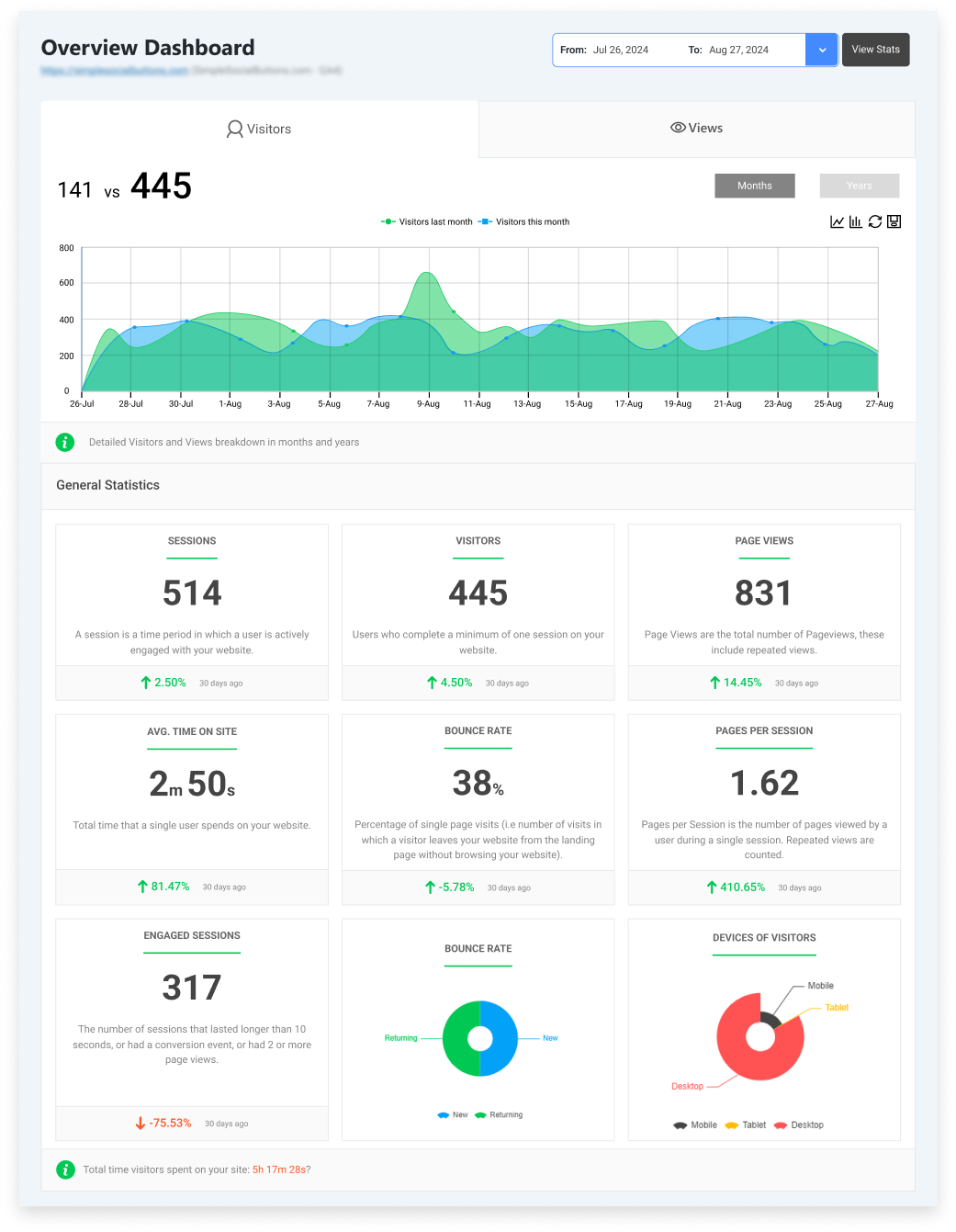
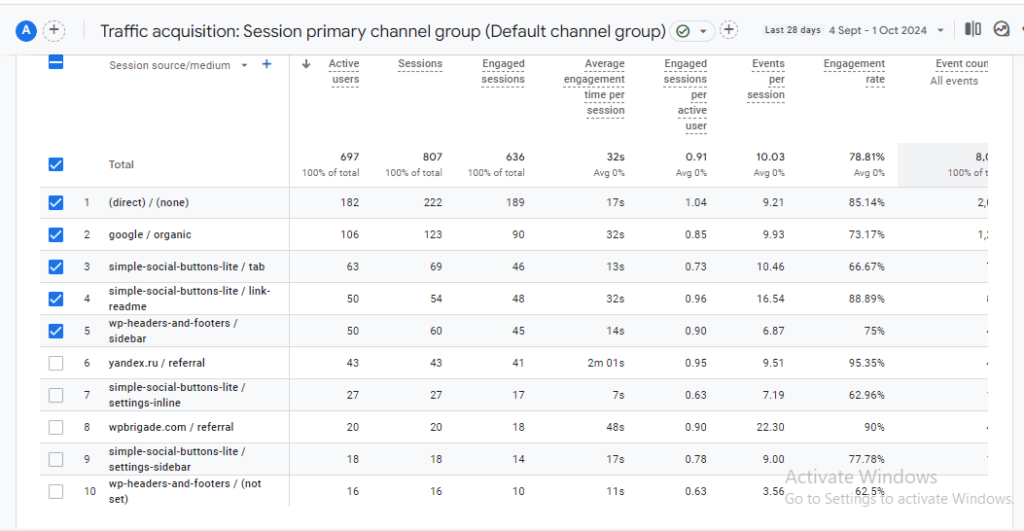
Google Analytics 4: Use GA4 to track user behavior from AI-driven traffic. For example, when an AI tool sends visitors to your website, GA4 can show how many users arrive from that source. Traffic from Google’s AI Overviews and AI Mode is reported in Search Console under the Web search type. You can also track engagement rates, session duration, and other user engagement metrics to gauge how valuable that traffic is.
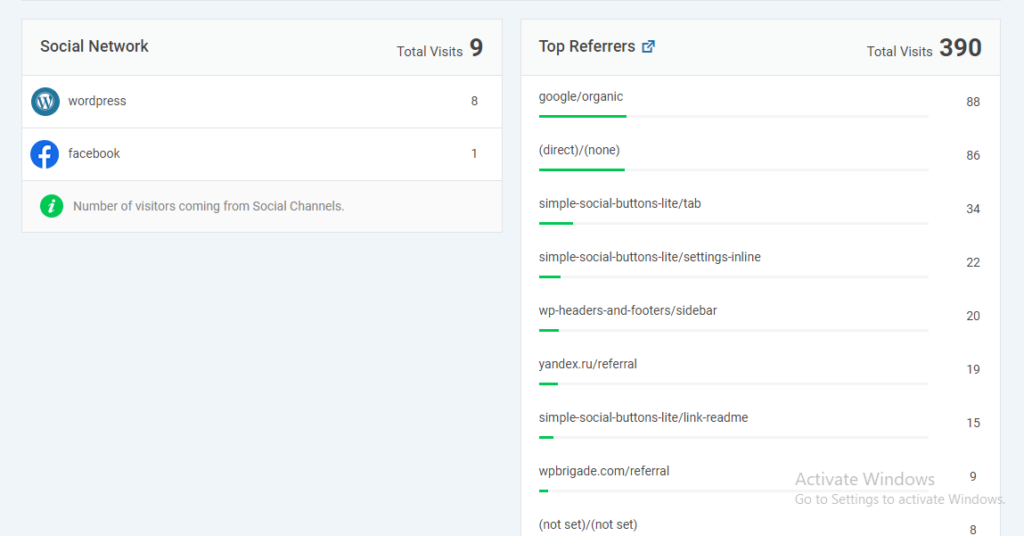
Analytify: In Analytify, you can track specific Google Analytics data like traffic sources, which helps you understand how much traffic is coming from AI-generated content. This integration provides a clearer view of how AI visibility is translating into real traffic and user engagement.
7. Analyze AI Responses for Brand Mentions, Context, and Sentiment
Check how AI-generated responses present your brand, including the context and the sentiment.
You need to look at whether your brand is mentioned positively, negatively, or neutrally in AI-generated content. Are users seeing your brand in a helpful context? For instance, if your brand is frequently mentioned as a solution to customer problems, it reflects a positive brand presence.
Tools like sentiment analysis software can help you understand the tone of AI responses about your brand. Is your brand being portrayed as an authority in your industry, or is it being linked to negative associations? This can help guide content strategies and improve brand positioning.
Pay attention to how your brand is framed. Does the AI model refer to your brand in a neutral manner, or is it positioned as a leader in the field? For example, AI models may suggest your product when users ask about the best tools for SEO, positioning your brand as a trusted solution.
AI Visibility FAQs
1. What is AI visibility, and why should I track AI brand visibility?
AI visibility refers to how your brand appears in AI-generated content, such as responses from LLMs (Large Language Models) like ChatGPT or Google AI. It’s important because AI-driven platforms are increasingly becoming the first place users turn for information. If your brand isn’t visible in AI-generated responses, you could be missing out on opportunities to engage potential customers and influence purchasing decisions.
2. How to audit brand visibility on LLMs?
You can track your brand’s visibility in on LLMs or AI responses by identifying relevant keywords and queries where your brand is likely to be mentioned. Google Analytics 4 (GA4) and Analytify can help track AI-driven traffic to your website. Additionally, tools like BuzzSumo and Mention can help monitor real-time AI mentions across different platforms.
3. How does AI affect my brand’s search visibility?
AI tools like ChatGPT and Google’s AI are becoming a major source of information retrieval, sometimes displacing traditional search results. If your brand isn’t showing up in these AI responses, you might be missing valuable exposure. Focusing on AI visibility alongside traditional SEO efforts ensures your brand remains prominent across multiple digital channels.
4. How can I improve my brand’s visibility in AI-generated content?
To improve your brand’s visibility in AI responses, you should:
Optimize your content for both SEO and AI systems, using relevant keywords and structured data.
Create authoritative, high-quality content that answers common industry questions.
Build backlinks and earn social proof to improve your brand’s credibility in the eyes of AI tools.
Leverage AI tools for content creation and optimization to make sure your content is AI-friendly.
5. How do I improve my brand’s chances of being featured in AI responses?
Improving your chances of being featured in AI responses requires creating content that is highly relevant, authoritative, and optimized for both search engines and AI systems. Focus on long-tail keywords, semantic SEO, and structured data to make it easier for AI models to pull and display your content. Additionally, creating high-quality, engaging content that answers common customer queries will increase the likelihood of your brand being referenced in AI-generated responses.
AI Visibility: Final Thoughts
AI visibility is how visible your brand is in AI-generated answers. As tools like ChatGPT and Google AI become more prominent in how people search for information, brands need to appear in those answers.
Key actions to enhance AI visibility include optimizing content for AI tools, creating high-quality, authoritative content, and using monitoring tools to track AI mentions. By focusing on content optimization and brand positioning, businesses can improve their chances of being featured in AI-generated answers and strengthen their online presence.
You may also like to read:
How are you planning to adapt your brand strategy to improve visibility in AI-generated content, and what steps will you take first to get started?