21+ Email Marketing Best Practices 2026

Do you want to know all about the email marketing best practices in 2026? If yes, you’re in the right place.
Email marketing means more than sending weekly newsletters. It means building real connections. It means making every message count.
These best practices work for every sender. Small business owners, marketing teams, and beginners all benefit. The right approach changes your open rates, click rates, and revenue.
This guide covers the best email marketing practices for 2026. It covers subject lines, send timing, and personalization. Each section gives you a specific action to take.
Let’s get started!
Email Marketing Best Practices (TOC):
Benefits of Email Marketing
Why even bother with email marketing? Well, it’s simple. Email marketing continues to be one of the most effective ways to reach your audience directly and personally. Here’s why it’s still a game-changer:
- High ROI: For every dollar you spend on email marketing best practices, expect an average return of $42. That’s a huge bang for your buck!
- Customer Retention: It’s not just about finding new customers; it’s also about keeping the ones you have. Regular, relevant emails keep your brand at the top of your customers’ minds.
- Personalization: With advancements in technology, emails can now be highly personalized. It isn’t just about adding a first name; it’s about tailoring content based on customer behavior and preferences.
These practices build stronger subscriber relationships. They increase engagement and drive more sales.
27 Best Practices for Email Marketing in 2026
Let’s move on to best practices for email marketing next.
Setting the Foundation
1. Understanding Your Audience
- Knowing who you communicate with is the cornerstone of effective email marketing best practices. Use segmentation tools to divide your audience based on their interests, behaviors, and demographics. This detailed understanding allows you to craft messages that resonate deeply with your audience, improving engagement and conversion rates.
- Email marketing analytics tools track important metrics such as open rates, click-through rates, and conversion rates, offering insights into how your emails are performing. They also allow for advanced segmentation and persona development, enabling you to send targeted, relevant content.
The table below shows pricing and key features for each email marketing analytics tool.
| Email Marketing Tool | Pricing Options | Key Features |
| Mailchimp | Free plan available | – Comprehensive analytics, Advanced segmentation, Automation and personalization options, Integrated CRM features |
| Campaign Monitor | Paid only | – Beautifully designed templates, Detailed reporting, Automation features, Transactional Email capabilities |
| Constant Contact | Paid only | – Intuitive interface, Social media integration, Event management tools, Extensive reporting and analytics |
| GetResponse | Free trial, then paid | – Email automation, A/B testing, Landing pages, Webinars, Conversion funnel features |
| HubSpot Email Marketing | Free plan available | – Part of a larger marketing platform, CRM integration, Email personalization, Detailed analytics, Marketing automation |
Update your strategy based on these insights every month. This keeps your campaigns effective.
The tools above cover email marketing analytics well. If you run WordPress and want full-site tracking too, including how email traffic affects your site metrics, Analytify is worth adding.
Analytify makes Google Analytics simple for WordPress users. It shows a clear dashboard inside your WordPress admin area. You get easy-to-read data on website’s traffic, social media performance, and marketing campaign results.
2. Optimizing Email Design for Different Devices
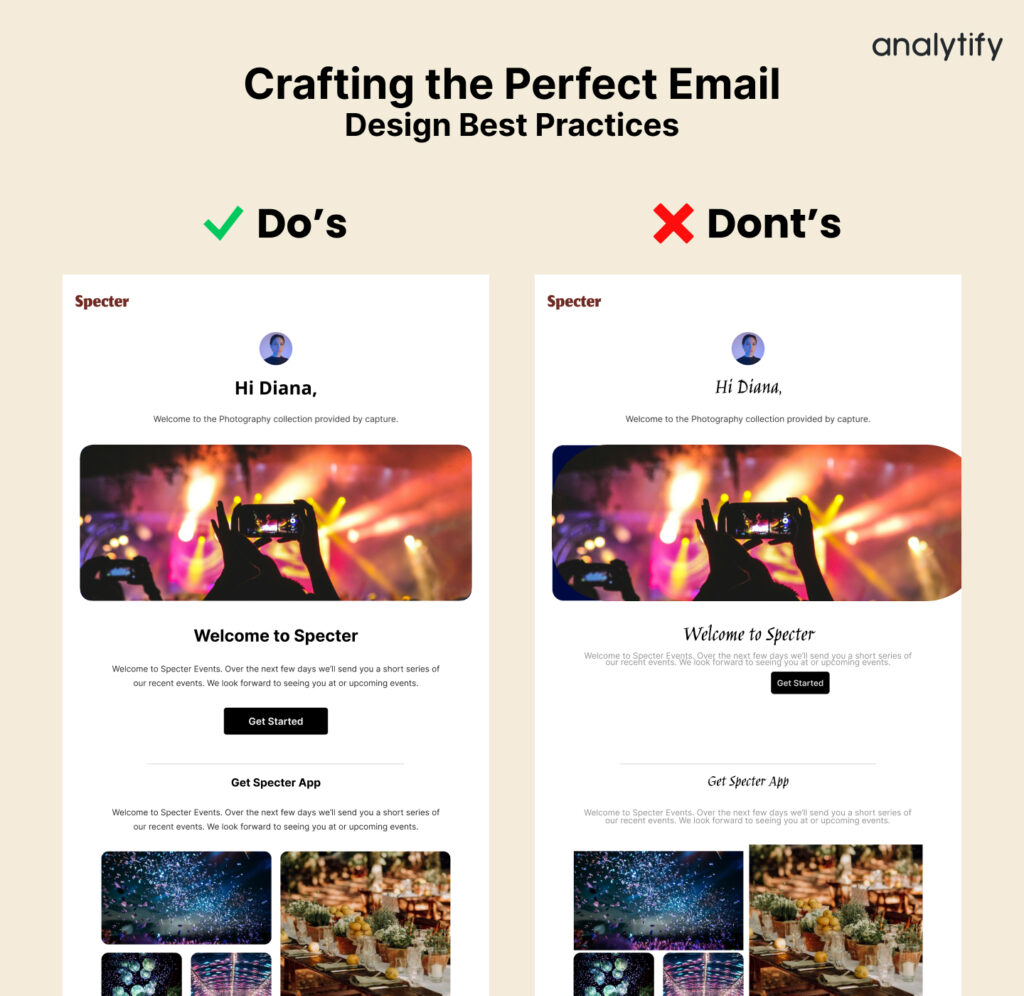
People check email on phones, tablets, and computers today. Your design should adjust automatically for each device. This keeps your message clear no matter where someone reads it.
Here’s how to optimize your email designs for different devices effectively:
3. Use Responsive Design Templates
Start with templates built to adapt to any screen size. Most email marketing platforms offer responsive templates. These adjust layout and size automatically for each device.
Keep It Simple: Simplify your email design. Complex designs with multiple columns or excessive elements can break easily on smaller screens. A single-column layout works best as it scales cleanly from desktop to mobile.
4. Consider Font Sizes
Keep your text large enough to read without zooming. Use at least 16px for body text. Use 22px to 24px for headlines. This keeps your email readable on every device.
5. Test Your Email Across Devices
Test your email on different devices before you send it. Tools like Litmus or Email on Acid show you how it renders across devices and email clients. This step catches display issues before your readers do.
Preview and adjust before every send. A desktop layout does not always work on a smaller screen. Increase line spacing, or tweak the layout, so key information shows without scrolling.
6. Optimize Images
Use high-quality images that are not too heavy. Large images slow down page loading times, especially on mobile. Choose sizes that load fast and look sharp on any screen resolution.
7. Touchable Calls-to-Action
CTA buttons must be easy to tap on mobile. Apple recommends a minimum size of 44×44 pixels. Add enough space around each button to prevent accidental taps.
These foundational practices set up a strategy that captures and keeps attention. Know your audience, and design emails that work on any device. This builds a solid base for everything that follows.
8. Add an Email Signature
Your email signature is valuable real estate, not just a sign-off. A well-designed signature builds trust and shows your brand’s personality. Include your name, title, company logo, social links, and a CTA when possible. Build one free with tools like Newoldstamp, which offers templates for your industry.
Content Strategies
9. The Art of the Subject Line
- The first thing your recipients see isn’t your beautifully designed email; it’s the subject line. Making a strong first impression here is necessary.
- Keep your subject line short. It should be 50 characters or less to ensure that your full subject line is visible on most devices.
- Use compelling, curiosity-sparking phrases that promise value.
- Experiment with emojis, questions, or teasers to see what drives the best open rates. This is one of the best practices for email marketing that can significantly impact your campaign’s success.
10. Personalization Techniques
- Personalization is more than just sprinkling personal details like names into your emails. It involves tailoring the email content based on user behavior, such as past purchases or interactions with your site.
- For instance, sending a product recommendation based on previous purchases can make emails feel more individualized and relevant. This strategy enhances the effectiveness of email best practices, leading to higher engagement rates.
11. Content Relevance
- Always ensure the content you send out is relevant to the recipient. It could mean adjusting your messages according to where they are in the customer journey or their specific interests. Keep content fresh and aligned with their current needs, which can be tracked via engagement metrics or direct feedback. Staying relevant is a crucial aspect of best email marketing practices.
12. Interactive Emails
- Engage your audience more actively by incorporating interactive elements into your emails. They can include embedded polls, surveys, or even simple games. Interactive emails are more engaging and provide valuable feedback and data about your subscribers. Using such innovative content aligns with best practices in email marketing by boosting user engagement and gathering insights.
These content strategies make your emails more effective. They help every email get seen and acted on.
Next, we cover testing and timing best practices.
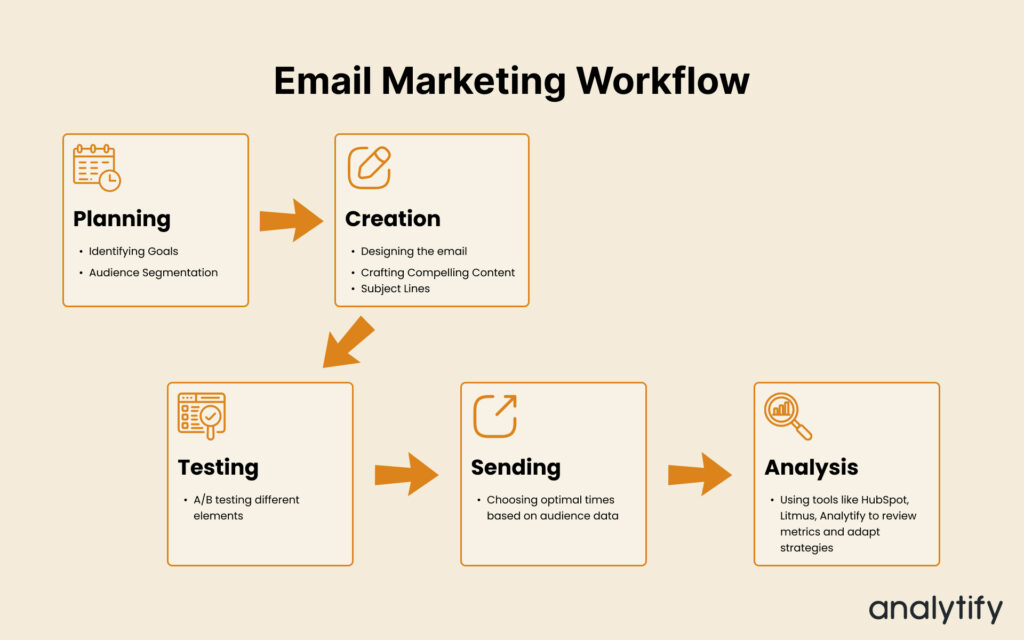
Testing and Timing
13. A/B Testing Your Emails
- One of the best practices for email marketing is A/B testing. A/B testing allows you to send two variations of the same email to see which performs better. You must never settle on assumptions
Test different elements: subject lines, email content, or CTA buttons. This refines your approach and keeps your campaigns improving.
A/B Testing Tools
Sure! Here’s a table that outlines the A/B testing tools along with their key features and pricing options:
| Tool | Key Features | Pricing |
| Mailchimp | User-friendly interface, tests various elements like subject lines, content, send times, automatic winner sending | Free plan available; paid plans for more features |
| Campaign Monitor | Strong A/B testing, up to 10 versions, automatic selection of the winning campaign based on metrics | Paid service, pricing based on subscriber list size |
| Optimizely | Extensive testing capabilities across emails, websites, and apps, visual editing, behavioral targeting | Custom pricing depending on scale and needs |
| GetResponse | All-in-one platform with A/B testing for subject lines, content, images | 30-day free trial, paid plans vary by list size and features |
| HubSpot | Part of a comprehensive marketing hub, tests email elements, detailed analytics | Free tools available; advanced features in paid plans |
| Litmus | Focus on email design and testing, A/B testing functionality, integrates with other platforms | Premium service with different pricing tiers |
The table below compares each tool’s capabilities and cost. Use it to pick the best fit for A/B testing your campaigns.
How to do A/B Testing?
Here’s how you can effectively implement A/B testing in your email campaigns:
- Choose One Variable to Test: Change only one element at a time to ensure accurate results. This could be the subject line, the call-to-action (CTA), the email layout, the images used, or even the send time. By isolating the variable, you can clearly understand its impact on the email’s performance.
- Define Your Goal: Determine what you’re testing for. Is it an open rate, click-through rate, or conversion rate? Setting a clear goal will help you understand which version of your email is more effective for achieving that specific objective.
- Segment Your Audience Randomly: Make sure the test groups are randomly selected and that they are similar in size and demographics. This ensures that external factors do not skew the results and that they apply to your broader audience.
- Test Simultaneously: Send both versions of your email simultaneously to avoid differences in time influencing the results. For example, sending one version in the morning and another in the evening could lead to misleading data due to differing email engagement patterns at these times.
- Use Significant Sample Sizes: The larger your test groups, the more reliable your data will be. If your email list is large enough, aim for a sample size that gives you statistically significant results, ensuring the data’s validity.
- Analyze the Results: After the test, analyze the data based on your goal. Look at the metrics that matter most to your test, whether those are open rates, click rates, or direct conversions from the email.
- Implement Learnings: Apply the insights from the A/B test to your broader email strategy. If one subject line significantly outperformed another, use a similar strategy in future emails. Continue to refine and test other elements based on ongoing results.
- Document and Repeat: Record all the tests you conduct and their outcomes. This documentation will help you build a knowledge base over time, guiding similar future tests and broader marketing strategies.
14. Determining Optimal Email Frequency
Send frequency is a key best practice. Too many emails overwhelm subscribers and raise unsubscribe rates. Too few emails let your audience forget your brand.
Here’s how you can determine the optimal email frequency:
- Understand Your Audience’s Preferences: Consider your audience’s preferences, which can be observed from previous campaign data or direct feedback. Some segments may appreciate more frequent updates, while others might prefer less frequent communication.
- Monitor Engagement Metrics: Pay close attention to each campaign’s open rates, click-through rates, and unsubscribe rates. A drop in engagement or increased unsubscribes can indicate that you’re sending emails too frequently.
- Test Different Frequencies: Implement A/B testing by dividing your audience into groups and varying the frequency of emails each group receives. This method can provide actionable data on how different frequencies impact engagement.
- Segment Your List: Not everyone in your audience wants to hear from you with the same frequency. Use segmentation to adjust your email frequency based on user behavior and interaction level. For example, active users might receive more frequent communications than less engaged subscribers.
15. Best Timing for Email Sends
Send timing greatly affects campaign success. The best time depends on your audience’s habits and time zone. Use analytics to see when your emails get opened. Test different days and times; the engagement gains can be significant.
- Best Days to Send Emails:
Tuesday, Wednesday, and Thursday are typically the best days to send email. Midweek days see higher engagement than Mondays and Fridays, according to CoSchedule research.
- Best Times to Send Emails:
Morning Hours (10 AM): This slot aligns with the start of the workday. It catches people as they check email first thing.
Early Afternoon (1 PM): This slot targets the post-lunch slump, when recipients look for a distraction.
Late Afternoon (around 4 PM): This slot catches people before they wrap up their workday.
Source (HubSpot).
| Time Slot | Why It Works |
|---|---|
| Morning (10 AM) | Catches people as they check email at the start of the workday. |
| Early Afternoon (1 PM) | Targets the post-lunch slump, when recipients look for a distraction. |
| Late Afternoon (4 PM) | Catches people before they wrap up their workday. |
Automation and Integration
16. Automation Strategies
- Automation is a powerful tool in email marketing, allowing for timely and relevant communication without constant manual effort.
- Set up automated email sequences for welcome emails, birthday offers, or follow-up messages after a purchase.
- These automated emails can significantly enhance the user experience and ensure consistent engagement. Utilizing automation is a crucial aspect of email marketing best practices.
17. Segmentation and Targeted Campaigns
Use segmentation to increase the relevance of your automated emails.
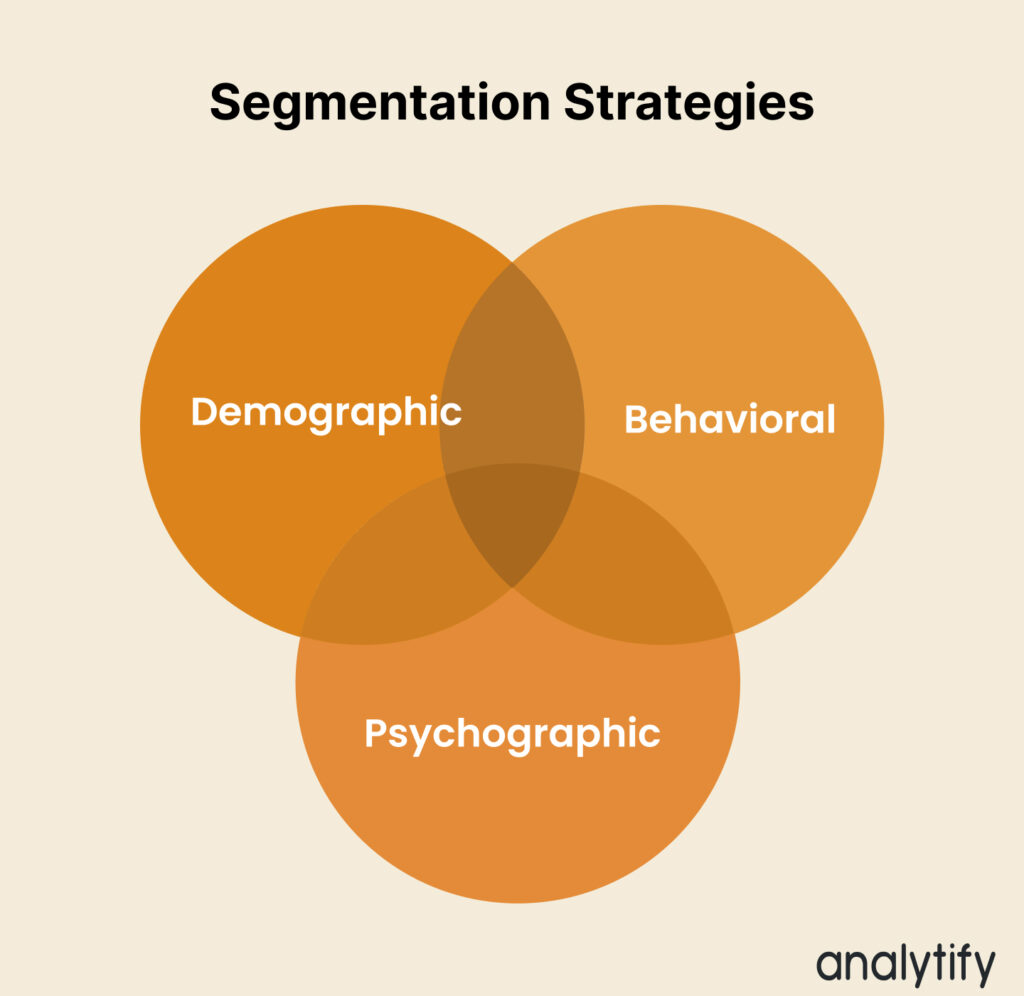
Divide your email list by demographics, behavior, or purchase history. This lets you tailor messaging to each segment’s needs. Targeted messaging improves campaign effectiveness significantly.
Picture an online clothing store with a wide customer base. To improve relevance, the store segments its email list. It builds targeted campaigns around specific criteria.
How to Do Segmentation?
Step 1: Data Collection
You start by collecting data from your customers through various means:
- Purchase history: What items have they bought? What categories do they shop in most frequently?
- Demographics: Information like age, gender, and location.
- Behavioral data: How often do they visit your website? What products do they view but not purchase?
Step 2: Creating Segments
Using the collected data, you create several distinct segments:
- Segment A: Young Adults (Ages 18-25) – This group frequently buys casual wear and trendy items.
- Segment B: Middle-Aged Professionals (Ages 26-45) – This group tends to purchase formal wear and high-quality, classic pieces.
- Segment C: Return Customers – Customers who have made multiple purchases in the past year.
Step 3: Crafting Targeted Campaigns
For each segment, you craft emails tailored to their interests and behaviors:
- Campaign for Segment A: Trend Alerts
- Content: Latest trends, new arrivals in the casual wear category, and a special discount on trendy items.
- Call to Action: “Shop the trend before it’s gone!”
- Campaign for Segment B: Professional Wardrobe Essentials
- Content: Showcase of new arrivals in formal wear, style guides for professional settings, and exclusive offers on premium brands.
- Call to Action: “Elevate your professional look!”
- Campaign for Segment C: Loyalty Rewards
- Content: Thank you message for their loyalty, early access to sales, and an extra loyalty discount on their next purchase.
- Call to Action: “Enjoy your exclusive rewards!”
Step 4: Sending and Monitoring
Send the targeted campaigns, then track open rates, click-through rates, and conversions for each segment. This data shows what resonates with each group. Use it to refine future communications.
Benefits
By segmenting your list and targeting your campaigns, you achieve several benefits:
- Increased Relevance: Each customer receives content more aligned with their interests and needs.
- Higher Engagement: Personalized content leads to higher open and click-through rates as customers are more likely to engage with content that appeals to them.
- Improved Conversion Rates: Tailored offers and products will likely lead to purchases.
This example shows how segmentation addresses each group’s preferences directly. It makes your marketing more effective and efficient. Recognizing each segment’s traits helps your messages hit the mark every time.
18. Integration with Other Marketing Channels
Your email marketing should not exist in a vacuum. Integrate it with social media, your website, and offline campaigns. This builds one cohesive marketing strategy.
For example, use social media to gather new email subscribers. Promote exclusive email content on social platforms to drive cross-channel engagement. This integration amplifies your overall marketing efforts.
19. Offer an Incentive to Sign Up
Offer something valuable in exchange for email addresses. A discount code, an exclusive ebook, or an intro video all work well. Use Analytify to track which incentive drives the most sign-ups, then optimize future offers with that data.
Experiment with different lead magnets to see what resonates. A fitness coach might test free workout plans, nutrition guides, or discount codes for training sessions.
20. Include Different Sign-Up Forms
Place sign-up forms in strategic locations across your website to boost visibility. Use Analytify to see which locations and form designs convert best. Make data-driven adjustments from there.
Compliance and Ethics
21. Understanding GDPR and Other Regulations
- Staying compliant with regulations like the General Data Protection Regulation (GDPR) is a legal necessity and a way to build trust with your audience.
- Ensure that your email marketing practices respect privacy laws by obtaining consent before sending emails, providing clear unsubscribe options, and managing data securely. Familiarizing yourself with these rules is important for following the best practices in email marketing in 2026.
22. Ethical Email Marketing
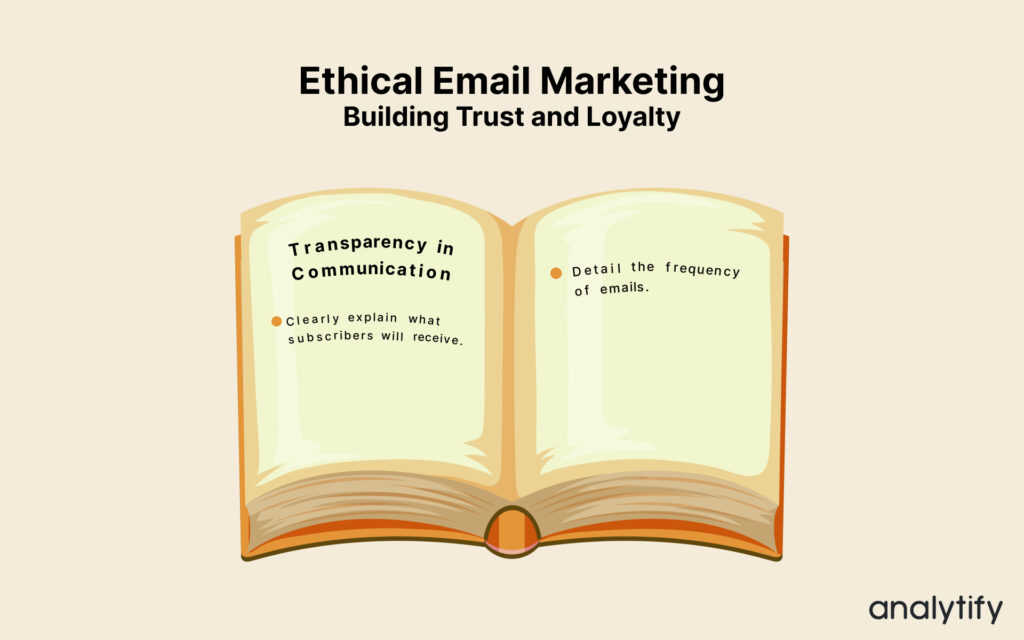
- Ethics in email marketing go beyond compliance. It’s about respecting your subscribers and treating them fairly.
- It means being transparent about what they can expect from your emails, avoiding misleading content, and being straightforward about the nature of your promotions. Ethical practices ensure long-term trust and loyalty, which are key to sustaining the effectiveness of best practices email marketing.
Advanced Analytics and Optimization
23. Key Metrics to Track
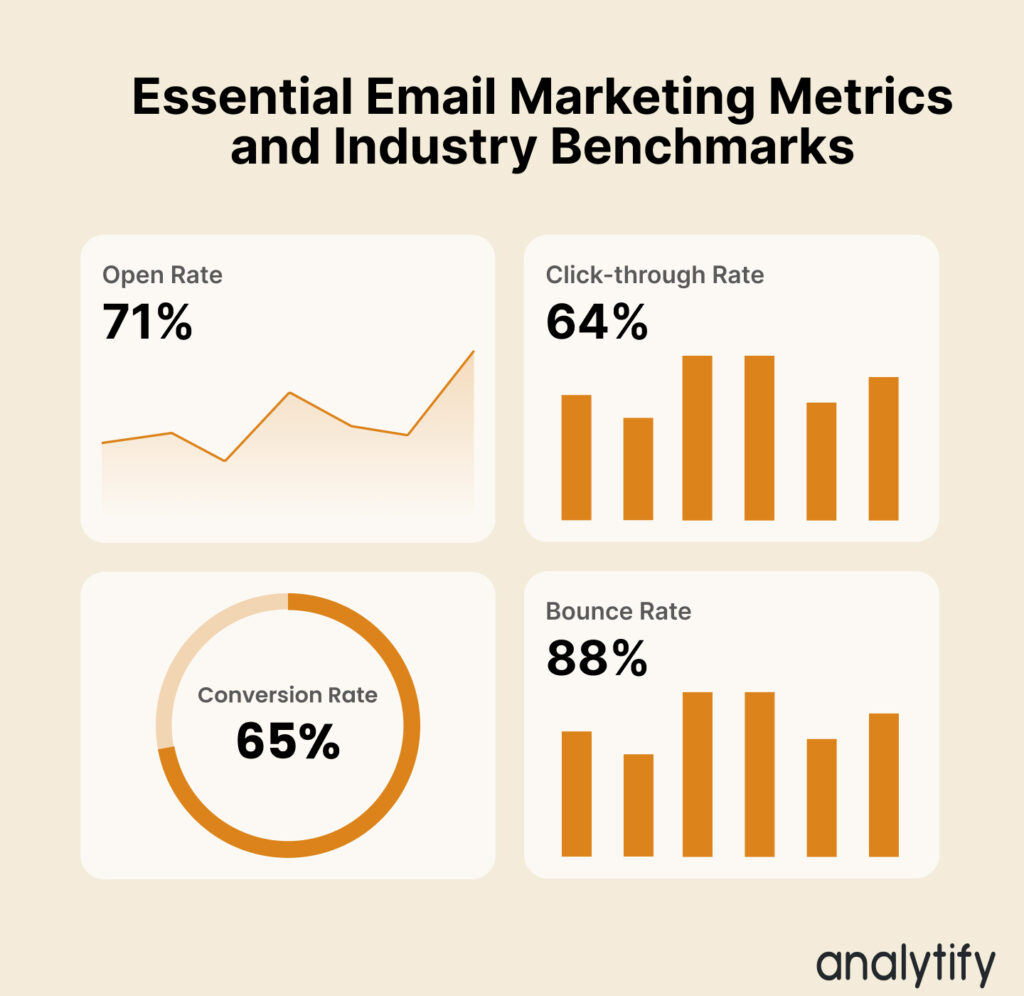
- To effectively measure the success of your email campaigns, you need to focus on key performance indicators such as open rates, click-through rates, conversion rates, and unsubscribe rates.
- Tracking these metrics provides insight into what’s working and what’s not, allowing for data-driven decisions. Utilizing tools to analyze these metrics is an essential part of best email marketing practices.
24. Email Deliverability Best Practices
- Ensuring your emails actually reach your subscribers’ inboxes is important. To improve deliverability, avoid spam triggers in your content, maintain a healthy sender reputation, and regularly clean your email list.
- Practices like these are fundamental to maintaining high deliverability, which is a cornerstone of effective email marketing best practices.
25. ROI Measurement and Improvement
Measure ROI to understand the financial impact of each campaign. Find which campaigns generate the most revenue relative to cost. Adjust your strategy based on that data.
These advanced practices keep your campaigns practical and cost-effective. Next, we cover future trends and innovations in email marketing.
Future Trends and Innovations
26. AI and Email Marketing
- Artificial intelligence (AI) revolutionizes email marketing by enabling more personalized and efficient campaigns. AI can help automate content creation, predict the best sending times based on subscriber behavior, and personalize emails at an individual level.
- Embracing AI correctly as part of your email marketing best practices can significantly enhance your campaign effectiveness and customer engagement.
27. Emerging Technologies in Email Marketing
Watch emerging technologies that could reshape email marketing. Machine learning improves prediction models. Augmented reality adds immersive content. Blockchain strengthens security and transparency. Staying ahead of these trends keeps your strategy current.
Use Analytify in your Email Marketing
Integrating Analytify into your email marketing strategy can significantly increase your ability to understand and act on your campaign analytics. (Read to install Analytify)
While Analytify is known for its simple WordPress integration with Google Analytics, it also gives deeper insight into how your email campaigns affect website behavior.
How Analytify Enhances Email Marketing?
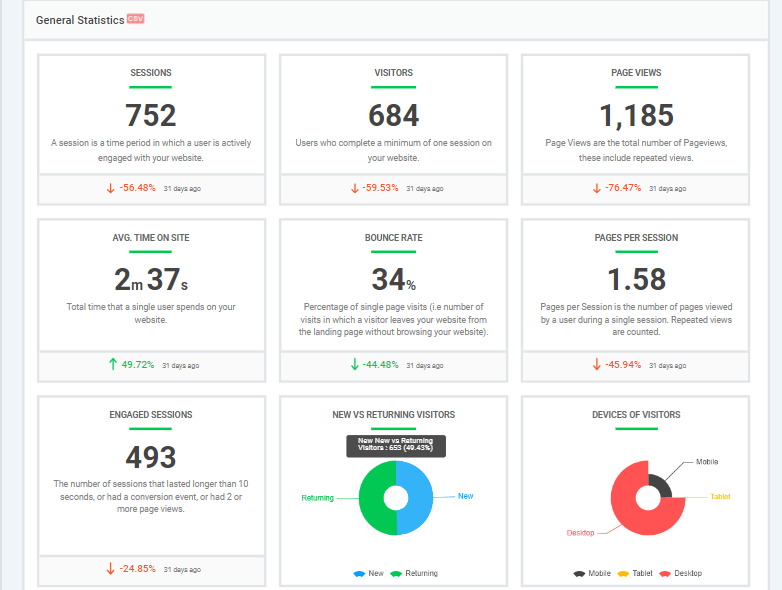
- Linking Email Campaigns to Site Traffic: Analytify can show you how recipients of your emails interact with your website. You can see which pages they visit after clicking through from an email, how long they stay, and what actions they take. This information is crucial for understanding the effectiveness of specific email campaigns in driving meaningful engagement.
- Conversion Tracking: Set up events in Google Analytics to track conversions that originate from your emails. Analytify makes these data points accessible directly within your WordPress dashboard, helping you see the direct impact of your emails on sales, sign-ups, or other key actions.
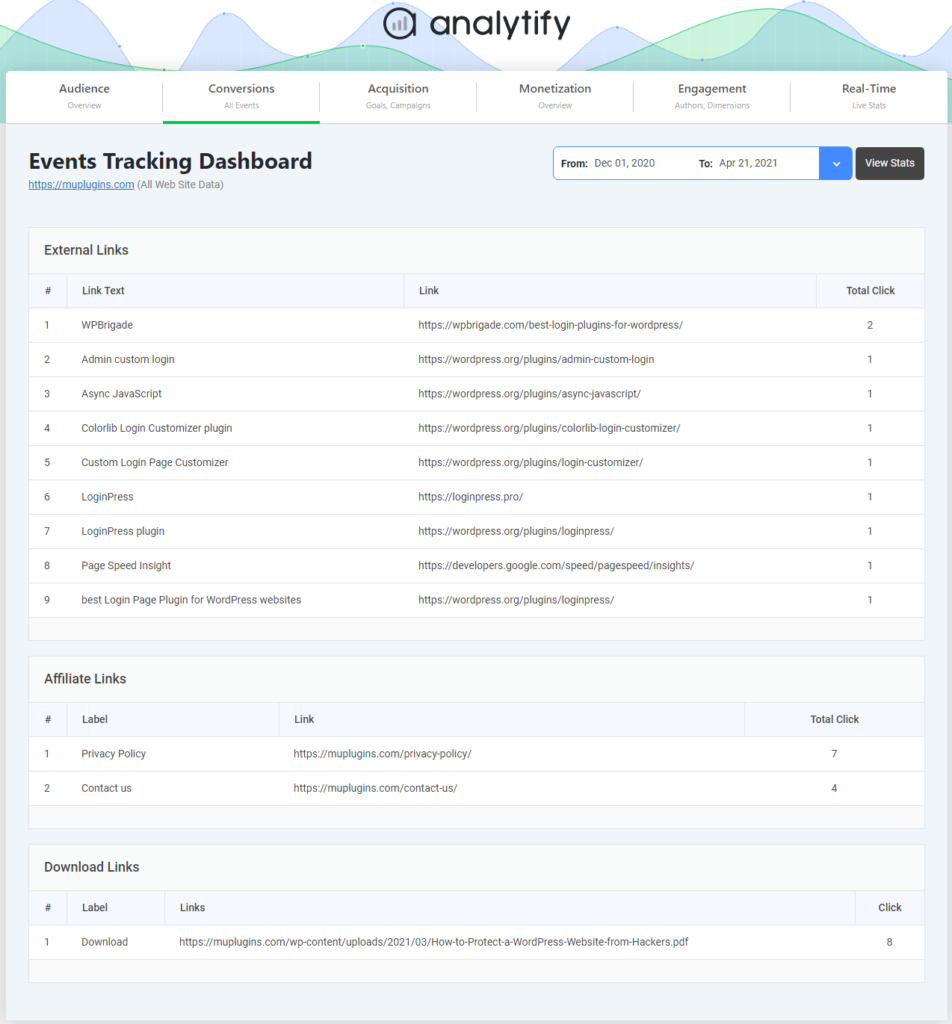
- User Behavior Insights: Gain insights into how different segments of your email list interact with your site. Analytify can help you understand which segments are most engaged and which may need more targeted content or offers to increase their activity.
- Enhanced Reporting: Use Analytify to create custom reports that show the performance of your email-driven traffic alongside other traffic sources. This holistic view allows for better strategic decisions and more fine-tuned targeting in your campaigns.
- Simplified Access: For WordPress users, having these analytics accessible directly on the dashboard simplifies the process of data analysis, making it easier to make informed decisions quickly without needing to navigate the complexities of Google Analytics.
Email Marketing FAQs
Q1: How often should I send emails to my subscribers?
Send frequency depends on your industry and audience. Start with industry benchmarks, then adjust based on subscriber engagement. More emails are not always better; focus on value over volume.
Q2: What are the best ways to segment my email list?
Segment by demographics, behavior, purchase history, or engagement level. Use data from subscriber interactions and preferences to build these segments. This creates more targeted, relevant campaigns.
Q3: How can I improve the open rates of my emails?
Write subject lines that spark curiosity or offer immediate value. Optimize every email for all devices. Send at times when your audience checks email most, and keep your list clean and engaged.
Q4: What metrics should I track to measure the success of my email marketing campaigns?
Track open rate, click-through rate, conversion rate, and unsubscribe rate. Also track ROI: the revenue each email generates relative to its cost.
Q5: How can I ensure my emails don’t end up in the spam folder?
Keep your content relevant and avoid spam trigger words like “free” or “guarantee.” Keep your list clean and remove inactive subscribers. Ask subscribers to whitelist your sending address to protect your sender reputation.
Q6: Can I use email marketing for lead generation?
Yes. Provide value through informative content and clear calls to action. Offer lead magnets like eBooks, webinars, or free trials to encourage subscribers to share their information.
Q7: Is A/B testing really necessary for email marketing?
A/B testing is essential to optimize your emails. Testing different elements shows what resonates with your audience. Use those results to make data-driven decisions that improve campaign performance.
Q8: How does Analytify help with email marketing?
Analytify tracks web traffic through Google Analytics. It shows how visitors from your email campaigns interact with your website. This reveals how well your emails drive traffic and conversions.
Q9: Why are my emails not landing in subscribers’ inboxes?
Check your SPF, DKIM, and DMARC records first; missing authentication is the top cause of inbox placement problems. Confirm your sending domain is verified with your email service provider. Review your bounce and complaint rates too, since high numbers signal a damaged sender reputation that inbox providers filter for.
Conclusion
These best practices are essential for email marketing success in 2026.
Keeping your email practices current improves the effectiveness of every send. It means respecting your audience, delivering valuable content, and refining your approach with data.
Whether you’re starting out or refining an existing campaign, these practices give you a roadmap. They lead to more engaging, productive, and ethical subscriber interactions.
We hope this article helped you understand email marketing best practices for 2026.
You may also want to read How to Track Google Analytics Top Selling Products in 2026.
Tell us which of these best practices you already use. What will you try next?